How Much Clearance Behind a Workbench? Broken Down
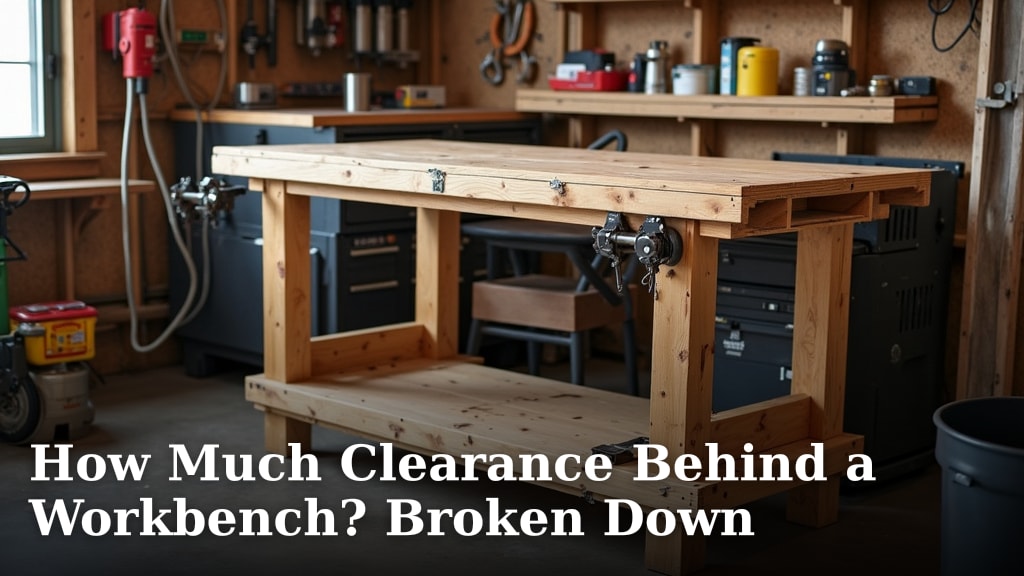
For your workbench, aim for at least 24 to 30 inches of clearance behind it. This provides enough space to move freely and access tools. It ensures you can work comfortably and safely.
Having adequate clearance prevents you from feeling cramped. It also makes it easier to reach for items stored on shelves or pegboards. Many DIYers find this amount of space is a good balance for most workshops.
- Clearance behind your workbench matters.
- Aim for 24-30 inches minimum.
- This allows comfortable movement.
- It helps with tool access too.
- Avoid feeling cramped in your workspace.
Let’s walk through exactly how much space you really need and why it’s important for your workshop setup.
Workspace Clearance: Why It Matters Behind Your Workbench
How much room do you really need behind your workbench? It’s a question that often gets overlooked. But having enough space can make a huge difference in how you work. Too little space feels cramped. It can lead to accidents and frustration. We’re going to break down exactly what you need.
The Basics: Your Personal Space Needs
Think about your own comfort zone. Most people need space to move. You’ll be standing, reaching, and sometimes stepping back. A good rule of thumb is to have enough room for one person to stand comfortably behind the bench. This means you can turn around without hitting anything. You can grab tools or materials easily.
The 24-Inch Minimum
Many DIY and workshop guides suggest at least 24 inches of clearance. This is often considered the absolute minimum. It’s enough to stand and reach for things. You can probably grab tools from a shelf. It might feel a little tight for bigger projects, though. This space is more for basic access. It’s not ideal for prolonged work.
The 30-Inch Sweet Spot
Stepping up to 30 inches makes a noticeable difference. This gives you more room to move your body. You can bend over more easily. You have space to step back and assess your work. This is where many find a good balance. It feels less restrictive than 24 inches. You can also more easily retrieve items from deeper shelves.
The 36-Inch Ideal for Comfort and Flow
If you have the space, aiming for 36 inches or more is even better. This provides ample room. You can easily walk behind the bench. You can even have a stool there sometimes. It allows two people to work near each other more comfortably. It’s a much more relaxed environment. This amount of space really helps with workflow. You aren’t constantly bumping into things.
Factors Influencing Your Clearance Needs
Your ideal clearance isn’t just about personal preference. It depends on a few key things. We need to consider what you’ll be doing at the bench. We also need to think about the tools and storage you’ll have.
Project Size and Type
Are you building small crafts or large furniture? For small projects, 24 inches might suffice. But if you’re working with large lumber or assembling big items, you’ll need more room. Imagine trying to maneuver a large sheet of plywood. You need space to turn and position it. Bigger projects demand more workspace.
Tool Storage and Accessibility
Do you plan to mount pegboards or shelves behind your workbench? These add depth. Tools hanging on pegboards still need clearance. Shelves with bins or boxes also take up space. You need to reach them easily. This means the clearance needs to account for the depth of your storage solutions. Consider what you’ll store and how you’ll access it.
Movement and Ergonomics
Working at a workbench should be comfortable. Poor clearance can lead to awkward postures. You might lean too much or twist your body. This can cause strain over time. Good clearance supports better ergonomics. You can stand naturally. You can shift your weight. This is important for long working sessions. The U.S. Department of Labor’s Occupational Safety and Health Administration (OSHA) often emphasizes safe working distances to prevent injuries (OSHA).
Traffic Flow in Your Workshop
Think about your entire workshop layout. Is the workbench against a wall? Or is it in the middle of the room? If it’s in a high-traffic area, you need more room. People need to walk past it. You don’t want a constant bottleneck. Good traffic flow means you can move around your shop without obstruction. This applies to moving materials and yourself.
Common Workbench Configurations and Their Clearance Needs
The way your workbench is set up affects how much space you need. Let’s look at a few common scenarios and what clearance works best.
Workbench Against a Wall
This is a very common setup. The workbench is pushed back against a wall. You’ll have your primary workspace in front. The space behind is for access to the wall and anything mounted there. For this setup, the 24-36 inch range is typical. If you have deep shelves or lots of pegboard, lean towards 36 inches. If it’s just a plain wall, 24-30 inches might be fine.
Freestanding Workbench
A freestanding workbench offers more flexibility. It’s not limited by a wall. This allows for different workflows. You might need clearance on all sides. If you can walk around it, you need space to do so. For a freestanding unit, consider at least 30 inches on the primary work side. If you can access it from multiple sides, ensure adequate room for movement on each side.
Workbench with Attached Storage Units
Some workbenches come with built-in cabinets or drawers. Others have hutches or overhead storage. These features extend the workbench’s footprint. You need to account for the depth of these units. If your attached storage is 12 inches deep, you’ll need more space behind it to access the main workbench surface. Always add the depth of your storage to your desired working clearance.
Measuring and Planning Your Workspace
Before you commit to a workbench or layout, measure your space. It’s better to plan this out early. Don’t assume you’ll “make it fit.”
Measure Your Available Space
Use a tape measure. Mark out the proposed workbench area. Then, mark out the proposed clearance behind it. Use painter’s tape on the floor. This helps you visualize the space. Walk through the area. Mimic common workshop tasks. Can you open drawers easily? Can you reach your tools? Can you move around freely?
Consider Your Tools and Workflow
What tools do you use most often? Where will they be stored? If you have large power tools, you might need space to feed materials into them. This requires room in front and potentially behind the bench. Think about the sequence of operations. Where do materials come from? Where do they go next? Your clearance directly impacts this flow.
We found that many hobbyists underestimate the space needed for dust collection systems or work lights. These items can protrude. They can reduce your effective clearance. Always account for anything that might extend beyond the basic workbench footprint.
A Simple Checklist for Workspace Clearance
- Measure your workshop space carefully.
- Mark out the workbench and clearance zones.
- Visualize your typical workflow.
- Account for attached storage units.
- Consider tool placement and accessibility.
- Ensure enough room for comfortable movement.
Maximizing Space When Clearance is Limited
What if you’re working with a tight space? Don’t despair. There are smart ways to make the most of it.
Vertical Storage Solutions
Use the wall space above and beside your workbench. Install shelves, pegboards, or magnetic tool holders. This keeps tools and supplies off the workbench surface. It also moves storage upwards. This helps maintain a clear path behind your bench. Many organizations like the Small Business Administration (SBA) recommend optimizing vertical space for efficiency (SBA).
Mobile Workbenches
A workbench on wheels can be a lifesaver. You can move it out of the way when not in use. This frees up floor space. You can position it for specific tasks. When it’s not against a wall, you can access it from multiple sides. Just ensure it’s stable when locked in place for work.
Folding or Collapsible Workbenches
These are excellent for very small areas. You can fold them up when you’re done. They take up minimal space. Some are wall-mounted and fold down like a Murphy bed. This is a great way to have a workbench without it permanently occupying your workspace.
Smart Tool Organization
Keep only essential tools within immediate reach. Store less frequently used items elsewhere. Use tool chests or cabinets. Smaller toolboxes can be stored under the workbench. This keeps the area behind it clear. Good organization is key to making a small space feel larger and more functional.
Conclusion
You’ve learned that the space behind your workbench isn’t just an afterthought; it’s key to a productive and safe workshop. Remember, 24 to 30 inches is a solid starting point for comfortable movement and tool access. For larger projects or more extensive storage, consider pushing towards 36 inches or more. Always measure your actual space and visualize your workflow. Don’t forget to factor in storage depth and traffic flow. Your next step is to measure your current or planned space and mark out the ideal clearance. You’ll feel the difference right away.
Frequently Asked Questions
What’s the absolute minimum clearance I can get away with behind my workbench?
While we recommend 24 to 30 inches, you might manage with as little as 18 inches if space is extremely tight. This will feel cramped, making it harder to reach tools or turn around comfortably. It’s best suited for very light tasks with minimal movement.
How does storage mounted behind the workbench affect clearance needs?
Any shelves, pegboards, or cabinets installed behind your workbench add depth. You need to ensure you can still access your workbench surface and reach items on those storage units. Add the depth of your storage to your desired working clearance. For example, if you want 30 inches of working space and have 12-inch deep shelves, you’ll need a total of 42 inches.
Do I need more clearance if I plan to use a stool behind my workbench?
Yes, if you plan to sit and work, you’ll need enough space for the stool to be positioned comfortably. This typically requires at least 36 inches of clearance. It allows you to pull the stool back slightly when standing or moving around the bench. This setup improves ergonomics for longer tasks.
Is 36 inches of clearance too much if my workbench is against a wall?
Having 36 inches of clearance behind a wall-mounted workbench is generally a good thing. It provides ample room to move, access wall-mounted items easily, and even have a small cart or storage bin there. Unless your workshop is exceptionally small, this amount of space enhances usability without being excessive.
Can I use less clearance if I have a very small workbench?
The size of your workbench itself doesn’t drastically change the required clearance. You still need enough space to stand, reach, and move safely, regardless of the bench’s width. A smaller bench might mean less distance to reach across, but the space needed for your body to maneuver remains largely the same.