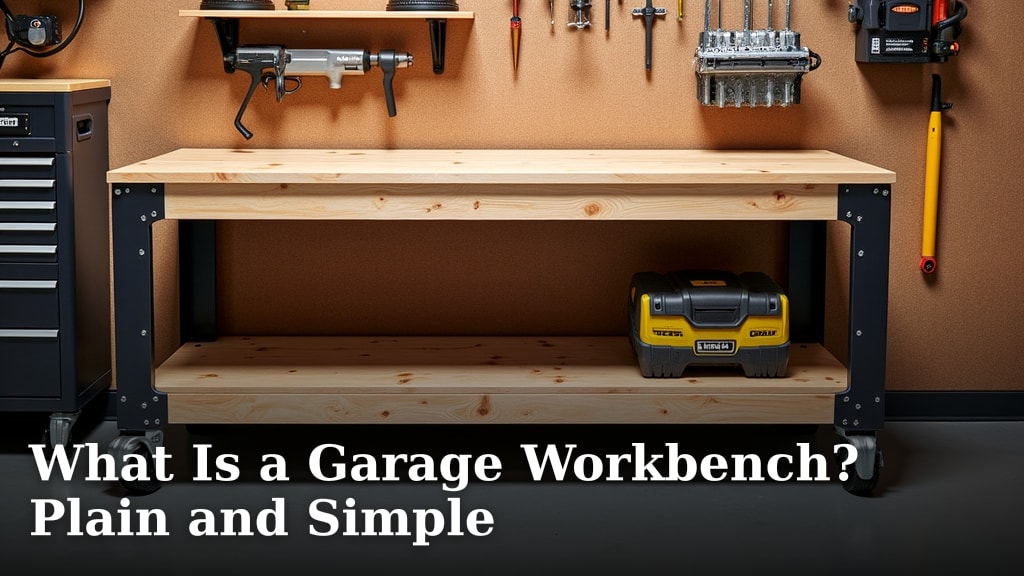
What Is a Garage Workbench? Plain and Simple
A garage workbench is a sturdy table or countertop designed as a durable work surface for projects, repairs, and storage in your garage or workshop. Its primary purpose is to give you a stable, dedicated space to handle tools, materials, and tasks safely and efficiently.
We found that most workbenches feature a heavy-duty top made from materials like solid wood, plywood, or metal. They are often built at a standing height to save your back. Many also include built-in storage like drawers, shelves, or pegboards to keep your tools organized and within reach.
- A workbench is the central hub for DIY projects and home repairs.
- Common materials are solid wood, laminate, or steel for different budgets and uses.
- Standard height is typically between 34 to 38 inches for comfortable standing work.
- Key features often include a vise, power strips, and organized tool storage.
- Choosing the right one depends on your typical projects, available space, and budget.
Below, we’ll walk through what to look for when choosing the best workbench for your space. We’ll cover materials, essential features, and how to set it up for maximum usefulness.
Understanding the Garage Workbench Basics
Think of a garage workbench as your project command center. It’s more than just a table. It’s a **dedicated zone** built to handle heavy tasks, keep your tools organized, and protect your back and your floors. At its core, you need a surface that is stable, at the right height, and tough enough to take a beating.
You might wonder, “Why can’t I just use the kitchen table?” A regular table isn’t designed for clamping a vise, handling greasy parts, or supporting a sheet of plywood. A proper workbench is engineered for these jobs. It turns your garage from a storage locker into a functional workshop.
Choosing the Right Workbench Material
The worktop is the most critical part. It’s where the action happens. We found that your choice here depends entirely on what you do. A woodworker needs a different surface than someone fixing lawnmowers. Let’s look at the most common options.
| Material | Pros | Cons | Best For |
|---|---|---|---|
| Solid Wood (e.g., Maple, Beech) | Durable, absorbs shocks, can be resurfaced, classic look. | Heavier, more expensive, can warp with moisture. | Woodworking, general crafts. |
| Plywood or MDF | Budget-friendly, easy to customize, good surface for projects. | Less durable, can sag over time, susceptible to spills. | Hobbyists, light to medium projects. |
| Stainless Steel or Galvanized Metal | Extremely durable, easy to clean, resistant to oil and chemicals. | Cold to the touch, can be noisy, dents are permanent. | Auto repair, garage mechanics. |
| Laminate | Affordable, smooth surface, resists stains. | Can chip or peel, not ideal for heavy clamping. | General assembly, clean work. |
Pro Tip: Many experts say a thick, solid-core door slab makes an excellent, affordable workbench top. It’s a fantastic starting point if you’re on a budget.
Workbench Dimensions and Standing Height
Getting the size right ensures comfort and efficiency. The golden rule for height is simple: it should match the height of your elbows when your arms are bent at your sides. This prevents back strain during long sessions.
Why Standing Height Matters
The standard range is **34 to 38 inches** tall. For most people, 36 inches is a great starting point. If you’re taller or shorter, measure! Stand straight, let your arms hang down, and bend your elbows 90 degrees. That level is your perfect bench height. Remember, you can always add or remove feet to adjust a workbench later.
Length and Depth Considerations
Length is all about your space. A standard single-car garage wall can fit a 6 to 8-foot bench. Depth should allow you to reach the back easily. A minimum of **24 inches deep** is common, but 30 inches gives you more room for bigger projects. Always measure your available space first.
Essential Features to Look For
A bare table is fine, but smart features make a workbench truly useful. Don’t get distracted by every gadget—focus on what will help you most.
Stability is Non-Negotiable
Your bench must not wobble. A wobbly bench is dangerous and frustrating. Look for wide, sturdy legs and a **solid frame**. Many workbenches have lower shelves that add significant stability by lowering the center of gravity.
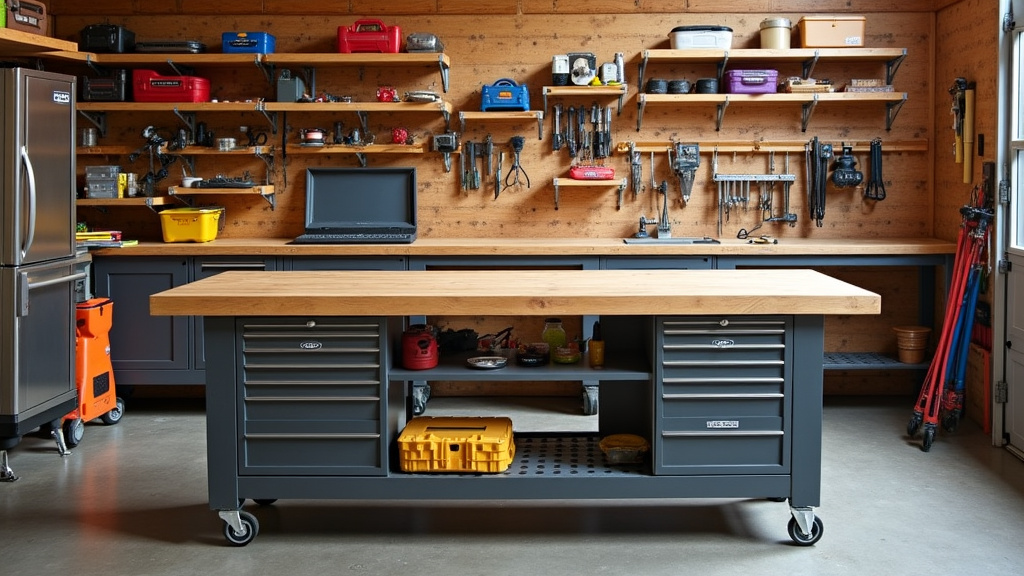
Integrated Storage Solutions
Having tools at your fingertips saves time and steps. We found that built-in storage is a major convenience factor. Common options include:
- Drawers: Perfect for hand tools, screws, and small parts.
- Shelves: Great for power tool cases and larger items.
- Pegboard or Backsplash: Ideal for hanging tools you use constantly.
- Power Strip: A mounted strip keeps cords tidy and outlets accessible.
Workbench Organization and Setup Tips
Once you have your bench, setting it up properly is key. This is where you create your personal workflow. Think about how you move.
The Vise is Your Best Friend
A **bench vise** is arguably the most important accessory. It acts as a second pair of hands, holding your workpiece securely. You can mount a vise on the corner or front edge. We found that a vise with at least 7 inches of jaw width handles most common DIY tasks.
Lighting and Power
You can’t work on what you can’t see. Position your workbench under good lighting. A plug-in **shop light** or LED strip makes a huge difference. Also, plan for power. Having an outlet strip on the bench means you aren’t tripping over cords to use your drill or sander.
Personalize Your Zone
This is your space. Add a small tray for fasteners, a magnet strip for wrenches, or a hook for your tape measure. Keep the surface clear of clutter when not in use. A quick wipe-down after each project keeps it ready for the next one.
Assembled vs. DIY Workbench Options
You have two main paths: buying ready-made or building your own. Each has clear trade-offs.
Pre-Made Workbenches
These are convenient. You unbox it, assemble the parts, and you’re ready to go. They often come with integrated features. The downside? You’re limited to the manufacturer’s design, size, and quality, which can vary widely.
Building Your Own Workbench
This route offers total customization. You choose the exact dimensions, materials, and layout. It can be more cost-effective, especially if you reuse lumber. The investment is your time and requires basic tools and skills. Many free plans are available online for all skill levels.
Your Workbench Shopping Checklist
Use this quick list when evaluating any workbench. It covers the absolute essentials you shouldn’t compromise on.
- ✔ Sturdy, wobble-free frame.
- ✔ Work surface material suited to your tasks.
- ✔ Correct height for comfortable standing work.
- ✔ Adequate surface area (length x depth) for your projects.
- ✔ Built-in storage that fits your tool collection.
- ✔ Pre-drilled holes for mounting a vise and accessories.
Answering these questions honestly will guide you straight to the right bench. It’s an investment in your time, your safety, and the quality of everything you create or repair from this day forward.
Conclusion
A garage workbench is more than just a piece of furniture. It’s the dedicated command center for your projects, repairs, and creative work. Choosing the right one comes down to matching its material, size, and features to your specific tasks and your available space. We found that a stable, properly-heighted bench with smart storage can dramatically improve your efficiency and safety. The most important step is to assess your own needs first. Use the checklist we provided to prioritize what matters most to you. This small investment of planning time will ensure you build or buy a workbench that truly serves you for years.
Frequently Asked Questions
Is a garage workbench just a fancy name for a table?
Not exactly. While it is a table-like surface, a true workbench is specifically engineered for durability and function. It features a heavy-duty top, a stable frame to prevent wobbling, and often includes integrated storage and mounting points for vises. A regular table isn’t designed to handle the clamping, impact, and heavy loads of workshop tasks.
What’s the minimum size for a useful workbench?
For a functional single-person bench, we recommend a minimum surface area of about 4 feet wide by 2 feet deep. This gives you enough room for a project and tool access without overwhelming a small garage. Always measure your wall space first; even a compact bench is better than no dedicated workspace.
Which material is best for someone who does both wood and metal projects?
You might consider a compromise. A solid wood or plywood top is excellent for woodworking. For metalwork, you can protect it by using a separate, removable metal plate or a thick sacrificial board for cutting and welding. This gives you flexibility without needing two separate benches.
Do I really need to attach a vise to my workbench?
While not absolutely mandatory, a vise is highly recommended. We found it acts as a crucial “third hand,” securely holding materials for sawing, drilling, or assembly. It dramatically improves safety and precision. Most quality workbenches include pre-drilled holes to make this installation simple.
How do I keep a wooden workbench top in good condition?
Regular maintenance is simple. Wipe down spills immediately, especially oils and solvents. For general protection, you can periodically apply a coat of boiled linseed oil or a paste wax to the surface. This helps resist moisture and minor scratches, keeping the wood healthy.