What Is a Sawhorse Used For? A Shop Guide
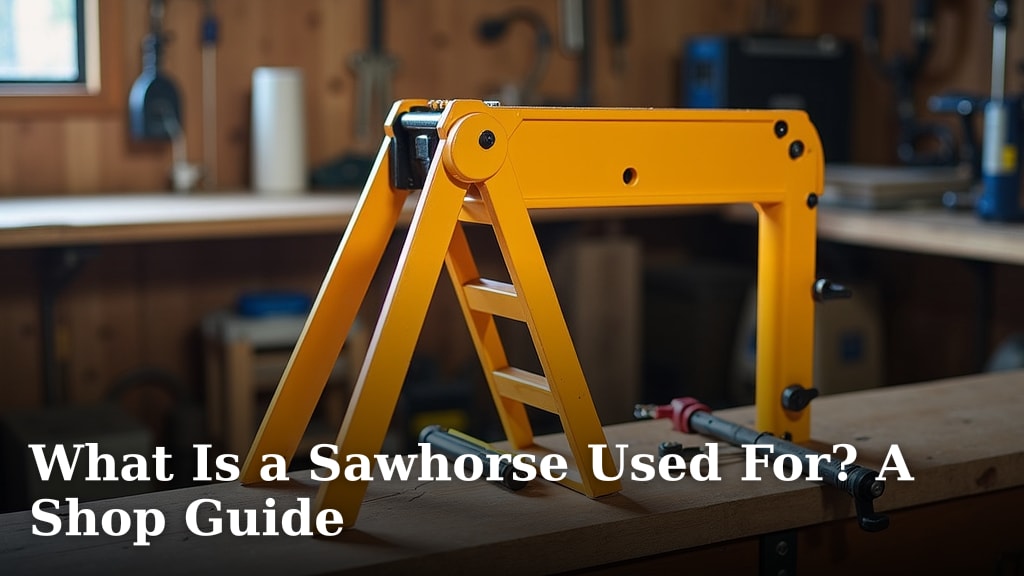
A sawhorse is a simple, portable work support designed to hold long planks, boards, or other materials at a comfortable working height. You can think of it as a sturdy, foldable bench that provides a stable base for cutting, sanding, painting, or simply organizing materials in your shop or garage.
We found that these basic tools are surprisingly versatile, forming the foundation for countless projects. Whether you are tackling a large painting project, need a stable spot for woodworking tasks, or want to keep lumber organized off the ground, a good pair of sawhorses is often the first thing you reach for. Many experts say they are indispensable for creating an instant, safe workspace almost anywhere.
- A sawhorse is a sturdy, A-frame stand that supports materials for working.
- Its primary use is to hold long boards and planks steady for cutting, sanding, or finishing.
- You can use them for a wide range of projects, from building a deck to painting a door.
- Most modern sawhorses fold flat for easy storage and portability.
- Look for pairs with built-in hooks or brackets for extra functionality.
Below, we break down the many practical ways you can use this essential shop staple, from basic setup to more advanced uses you might not have considered.
The Many Practical Uses of a Sawhorse in Your Shop
A sawhorse acts as the foundational workbench for countless projects, providing a stable, elevated platform for your tasks. Its main job is to hold materials steady, letting you work safely and efficiently. Let’s explore how you can put this simple tool to work.
Core Functions: Cutting, Sanding, and Finishing
The most common use for a sawhorse is supporting wood for cutting. You place a long board across a pair of sawhorses, creating a stable bridge. This setup allows you to use a circular saw, jigsaw, or hand saw safely. We found that this simple support dramatically reduces the risk of the wood slipping or kicking back.
- Cutting lumber: Hold planks steady for precise, straight cuts.
- Sanding surfaces: Secure a board on its edge for easier access to all sides.
- Applying finishes: Keep doors, tabletops, or cabinets elevated for painting, staining, or varnishing.
Imagine trying to sand a long door propped on a couple of paint cans. It’s wobbly and frustrating. A sawhorse removes that wobble entirely. It’s a simple change that makes your work better.
Setup and Stability: Getting Started Right
Proper setup is key to using a sawhorse effectively. Most modern sawhorses have folding legs that click into place. Always check that the legs are fully extended and locked before you put any weight on them. A solid, level surface underneath is just as important. If your floor is uneven, your work will be too.
Placement for Safety and Ease
Position your sawhorses so you have room to move around them. You should be able to walk freely on all sides. This is especially important when using power tools. Leave enough space for your material to overhang slightly, giving you a good grip for cutting or sanding.
Portability and Storage: A Workhorse You Can Move
One of the biggest advantages of a sawhorse is its portability. They are designed to fold flat. This makes them easy to carry to a job site, store in a garage, or tuck into a closet. We found that models with carrying handles or built-in hooks are especially convenient. The ability to quickly set up a stable work surface anywhere is a huge benefit. Many experts recommend keeping a pair in your vehicle for on-the-go projects.
Safety and Ergonomics: Protecting Your Body
Using a sawhorse is not just about convenience; it’s a key safety practice. It brings your work to a comfortable height. This reduces strain on your back and knees. According to guidelines from the Occupational Safety and Health Administration (OSHA), working at a proper height helps prevent musculoskeletal injuries. A sawhorse helps you maintain good posture while you work.
Also, a sawhorse keeps your material secure. This means you can use both hands to control your tool, whether it’s a saw, sander, or paintbrush. A stable workpiece is a safer workpiece. That’s a simple rule we can all appreciate.
Advanced and Creative Uses
Beyond basic cutting, you can use sawhorses in many clever ways. They can form the base for a makeshift workbench when you add a sheet of plywood across two pairs. They are perfect for supporting large, flat items like doors or drywall during painting. We found that you can even use them as temporary supports for building scaffolding or holding long pipes while you cut them.
Choosing the Right Sawhorse for Your Needs
Not all sawhorses are the same. They come in different materials and weight capacities. Here’s a simple comparison to help you decide.
| Type | Material | Best For | Considerations |
|---|---|---|---|
| Standard | Wood or Plastic | General purpose, light to medium duty | Very affordable, may not hold extremely heavy loads |
| Heavy-Duty | Steel or Metal | Professional use, heavy lumber, construction | Higher weight capacity, can be heavier to carry |
| Adjustable Height | Various | Tasks needing different working heights | Great for ergonomic comfort, may have moving parts to maintain |
| Built-in Hooks/Brackets | Various | Holding tools, clamps, or light fixtures | Extra functionality, very handy for keeping work areas tidy |
Consider what projects you do most often. If you are a homeowner doing occasional repairs, a standard pair is likely sufficient. If you are a contractor, investing in heavy-duty models is a wise choice. We found that looking for a pair with a weight rating of at least 500 pounds is a good starting point for most jobs.
Maintaining and Caring for Your Sawhorses
With proper care, your sawhorses can last for years. After each use, wipe them down to remove sawdust or paint. Check the folding mechanisms to make sure they aren’t loose. Store them in a dry place to prevent rust or warping. A little maintenance goes a long way. You can think of it as keeping your trusty tool ready for the next project.
Checklist: Before You Start Your Project
Use this quick checklist to ensure you’re set up for success.
- Is your sawhorse surface clean and free of debris?
- Are the legs fully extended and locked securely?
- Is the sawhorse placed on a flat, stable part of the floor?
- Do you have enough clearance around the work area?
- Is the weight of your material within the sawhorse’s capacity?
Tips for Getting the Most from Your Sawhorses
Here are some practical tips we’ve gathered. Always use two sawhorses for long materials to prevent sagging. For very light materials, you might get by with one, but two is always better. If you are using them as a temporary table, consider adding non-slip pads on top to keep the plywood from sliding. Finally, label them if you have more than one pair, so you can grab the right ones quickly. We found that this simple habit saves time and frustration in a busy shop.
Final Thought on Making Sawhorses Work for You
A sawhorse is more than just a stand. It’s your partner in creating a safe, efficient workspace. By understanding its core functions, you can tackle everything from a simple weekend project to a major home repair. We hope this guide has shown you just how versatile and useful these tools can be. You now have the knowledge to choose, set up, and use your sawhorses with confidence. The next time you face a big project, remember that a stable base is the first step to great work.
Conclusion
A sawhorse is your most reliable partner for creating a stable, safe workspace. You now know it’s essential for cutting, sanding, and finishing, while also being portable and ergonomic. The key takeaway is to match the sawhorse to your specific projects and always prioritize a secure setup. You can trust that this simple tool will make your work easier and safer. Your next step is clear: take a look at your upcoming projects and choose a pair of sawhorses that fits your needs and budget. Start building with a solid foundation today.
Frequently Asked Questions
What is the main purpose of a sawhorse?
The main purpose of a sawhorse is to provide a stable, elevated platform to support materials like wood or drywall. It allows you to work on them safely at a comfortable height for cutting, sanding, or painting. This simple support makes your projects more efficient and reduces physical strain.
Can I use a single sawhorse for my projects?
While you might use one for small, light items, it is strongly recommended to use a pair of sawhorses. Using two supports prevents long materials from sagging or tipping, which is critical for safety and accuracy. A pair creates a stable bridge for almost any task.
How much weight can a typical sawhorse hold?
Weight capacity varies by model. A basic wooden or plastic sawhorse may hold around 500 pounds, while heavy-duty steel models can support 1,000 pounds or more. Always check the manufacturer’s rating and never exceed it. We found that exceeding the weight limit is a common safety mistake.
Are sawhorses only for woodworking?
No, sawhorses are incredibly versatile. You can use them to hold doors for painting, support drywall during installation, or as a temporary base for a workbench. They are useful for any project that requires a stable, elevated work surface.
How do I store my sawhorses properly?
The best way to store sawhorses is to fold them flat and keep them in a dry location to prevent rust or warping. After use, wipe off sawdust or paint residue. Regularly check the folding mechanisms to ensure they are secure and functional for your next project.