Workbench Height for a 6 Foot Person: Numbers That Matter
For a 6-foot person, the ideal workbench height is generally around 34 to 36 inches. This range allows for comfortable working without excessive bending or reaching, making your projects much more enjoyable. You want your elbows to be at about a 90-degree angle when standing at the bench. This is key for proper ergonomics.
Finding the right workbench height is more than just a number; it’s about creating a space that works for your body. A workbench that’s too high or too low can lead to back strain and fatigue. We’ve found that paying attention to these details makes a big difference in how long you can work comfortably. It’s about making your shop a better place to be.
- Ideal height for a 6-foot person: 34-36 inches.
- Aim for a 90-degree elbow bend when standing.
- Proper height reduces strain and fatigue.
- Ergonomics matter for comfort and efficiency.
Let’s dive into how to measure and confirm the perfect workbench height for you.
“`htmlSetting Up Your Workbench at the Right Height
Getting your workbench height just right is like finding the perfect chair for your desk. It makes all the difference for your comfort and how well you can work. For someone who stands around 6 feet tall, a good general range is between 34 and 36 inches from the floor to the work surface. This height is based on ergonomic principles. We’ve found this range allows most people of this height to work without hunching over or reaching too high.
The goal is to keep your elbows bent at about a 90-degree angle when you’re standing naturally at your bench. Think about how you stand when you’re doing detailed work. You want your arms to be relaxed, not strained. This simple adjustment can prevent a lot of aches and pains later on. It’s a small change that leads to a big improvement in your workshop experience.
Why Workbench Height Matters for a 6-Foot Person
Your height plays a big role in what workbench height feels best. A person who is 6 feet tall has a different center of gravity and arm length than someone shorter or taller. If your workbench is too low, you’ll constantly bend your back and neck. This can lead to chronic back pain. On the flip side, a bench that’s too high forces you to hold your arms up constantly. This strains your shoulders and neck. Many people don’t realize how much their workspace setup is affecting their body.
Research in ergonomics consistently shows that proper workstation height reduces the risk of musculoskeletal disorders. For example, the Occupational Safety and Health Administration (OSHA) often provides guidelines for reducing workplace strain. While they may not have a specific number for home workshops, the principles are the same: minimize awkward postures. For a 6-foot individual, a 34-36 inch bench height often achieves this ideal neutral posture.
The Comfort Factor: Working Without Strain
Imagine spending hours on a project. If your bench is the wrong height, those hours can feel like an eternity. You’ll start to feel it in your back, your neck, and your arms. But with the correct height, you can focus on your task. Your body remains in a more natural position. This means you can work longer and more productively without feeling worn out. It’s about making your hobby or work enjoyable, not a chore.
Productivity and Precision: How Height Affects Your Work
It’s not just about comfort; it’s about performance too. When your workbench is at the right height, you have better control over your tools and materials. You can apply the right amount of pressure for tasks like sanding or sawing without overexerting yourself. This leads to more precise work and fewer mistakes. A stable, comfortable position allows for better fine motor control, which is essential for detailed crafting.
How to Measure and Find Your Ideal Workbench Height
You don’t need to be a rocket scientist to figure this out. The best way is to do a quick test right in your own home. Stand up straight with your arms relaxed at your sides. Then, bend your elbows to a 90-degree angle, as if you were about to start working on something. Now, measure the distance from your bent elbow to the floor. This measurement is a very good indicator of your ideal workbench height.
Let’s break down the measurement process step-by-step. Grab a tape measure and a helper if you have one. Stand naturally in front of where your workbench will be. Have your helper measure from the floor up to the point of your elbow. This gives you a starting number. Remember, this is a guideline, and personal preference can play a role.
The Simple Elbow Test
This is the most common and effective method. Here’s how to do it:
- Stand in your typical work posture.
- Let your arms hang relaxed at your sides.
- Bend your elbows to a 90-degree angle.
- Have someone measure the vertical distance from the floor to the bottom of your elbow.
- This number is a strong starting point for your workbench height.
Considering Different Tasks
While the 90-degree elbow rule is a great general guideline, some tasks might benefit from slight adjustments. For very heavy-duty work, like hammering or forceful chopping, you might want a bench that’s an inch or two lower. This allows you to use your body weight more effectively. For delicate tasks requiring extreme precision, a slightly higher bench might give you more control. However, for most general woodworking and DIY projects, sticking to the standard ergonomic height is best.
Adjusting Your Existing Workbench
Don’t have a brand new, adjustable workbench? No problem! Many workbenches can be modified. You can add risers to the legs, like sturdy wooden blocks or metal plates, to increase the height. Make sure any additions are strong and stable. They should be securely attached so they don’t shift during use. Check that the bench remains level and doesn’t wobble.
Sometimes, you might need to lower a bench. This can be trickier, often involving cutting down the legs. If you do this, measure carefully and ensure all legs are cut to the exact same length. Reattaching casters might also affect the final height, so keep that in mind. The goal is to achieve that stable and correct working height.
Workbench Height and Material Thickness
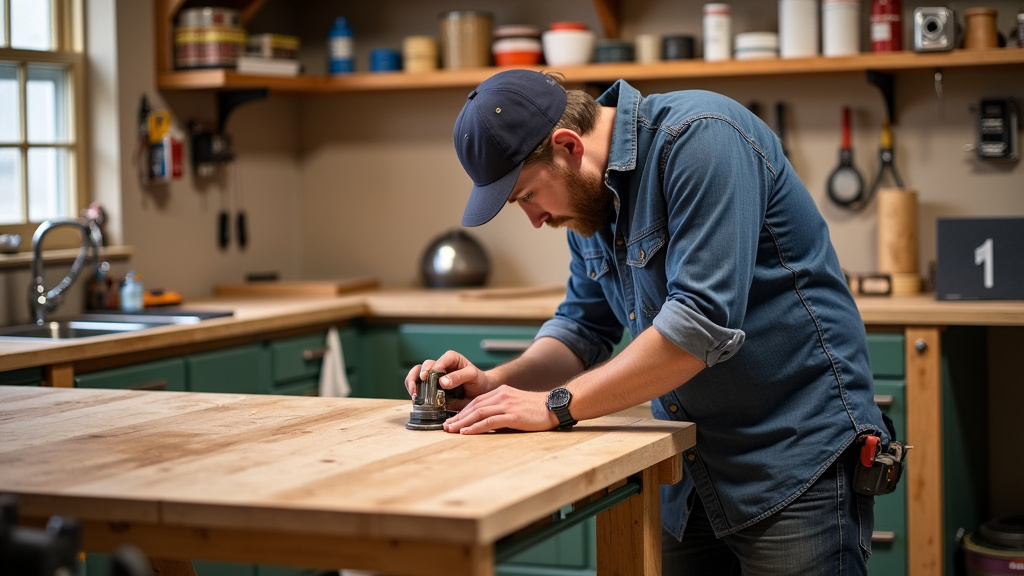
It’s important to remember that the measurement is to the top of your work surface. If your workbench has a thick top, like a 2-inch butcher block, this needs to be factored in. Let’s say your elbow test suggests 35 inches. If your bench frame is built for a 1-inch top, but you’re adding a 3-inch top, you’ll need to account for that extra 2 inches.
Here’s a simple way to think about it:
| Your Ideal Elbow Height | Bench Frame Height (for 1″ top) | Total Workbench Height (for 1″ top) | Your Required Frame Height (for X” top) | Final Workbench Height (for X” top) |
|---|---|---|---|---|
| 35 inches | 34 inches | 35 inches | 32 inches (if using a 3″ top) | 35 inches |
This table shows how adjusting for your material thickness ensures your final work surface is at the right height. Always measure from the floor to the final surface you’ll be working on.
A Quick Checklist for Your Perfect Workbench Height
To ensure you’ve got it right, run through this quick checklist:
- Stand at your bench: Do you feel your back and neck are straight?
- Elbow position: Are your elbows bent at approximately 90 degrees?
- No reaching or hunching: Are you avoiding awkward body positions?
- Comfort for tasks: Can you comfortably perform common tasks without strain?
- Stability check: Is your workbench sturdy and not wobbling?
- Consider your shoes: Are you wearing typical work shoes?
Conclusion
Getting your workbench height right is a simple step that makes a huge difference. For you, as a 6-foot individual, aiming for a surface height between 34 and 36 inches is your best bet for comfort and efficiency. Remember, the goal is that relaxed 90-degree bend in your elbows. This reduces strain, prevents pain, and helps you work with greater precision. Don’t guess; measure your ideal height using the simple elbow test. Take this advice and apply it to your workshop today!
Frequently Asked Questions
What if I’m slightly taller or shorter than 6 feet?
If you’re not exactly 6 feet, you’ll want to adjust the 34-36 inch range slightly. A good rule of thumb is to still use the elbow-to-floor measurement. Stand naturally, bend your elbows to 90 degrees, and have someone measure from the floor to the bottom of your elbow for your personal ideal height.
Can I use a standard kitchen counter height as a guide?
Kitchen counter height is typically around 36 inches, which is at the higher end of the ideal range for a 6-foot person. While it can be a starting point, it might be a little too high for comfortable, long-term work. Always perform the elbow test for the best fit for your specific body and tasks.
Does the type of work I do change the ideal height?
Yes, slightly. For very heavy tasks like hammering or chopping, a bench that’s an inch or two lower can help you use your body weight more effectively. For extremely detailed or delicate work, a bench that’s an inch or two higher might offer better control. However, the 34-36 inch range is excellent for most general projects.
How do I make my current workbench taller if it’s too low?
You can add stable risers to the legs of your existing workbench. Sturdy wooden blocks or metal plates securely attached can increase the height. Ensure the additions are strong and that the bench remains level and does not wobble once the risers are in place.
What’s the best way to measure my elbow height accurately?
Stand up straight with your arms relaxed at your sides. Bend your elbows to a perfect 90-degree angle. Have a friend or family member measure the vertical distance from the floor straight up to the bottom of your elbow. This measurement provides a reliable starting point for your workbench height.