Do You Need an Anti-Fatigue Mat at a Workbench?

Yes, you likely need an anti-fatigue mat at your workbench if you spend any significant time standing. These mats are designed to reduce strain on your feet and legs, making long hours much more comfortable and helping to prevent aches and pains. Think of them as a comfortable cushion for your hard workspace.
Standing on hard floors for extended periods can lead to fatigue and discomfort. An anti-fatigue mat provides a softer, more forgiving surface. This can improve your overall well-being and productivity. Many users report feeling less tired at the end of the day.
- Anti-fatigue mats offer cushioning for your feet and legs.
- They help reduce strain from standing long periods.
- They can lead to less fatigue and more comfort.
- They are a worthwhile addition for frequent workbench users.
Let’s take a closer look at how these mats work and who can benefit most from having one in their workshop.
“`htmlShould You Get an Anti-Fatigue Mat for Your Workbench?
Standing for long stretches at your workbench can feel like a workout, and not the good kind. Your feet get sore, your legs ache, and by the end of the day, you just want to sit down. An anti-fatigue mat is a simple tool that can make a big difference. It’s designed to give your feet and legs a break.
Think of it like this: standing on concrete or a hard wooden floor is like trying to run a marathon in unsupportive shoes. Your body takes a beating. An anti-fatigue mat is like putting on those supportive running shoes for your standing time. It adds a cushion that makes a real difference.
How Do Anti-Fatigue Mats Work?
These mats aren’t just thick pieces of foam. They use clever design to help you out. They provide a surface that’s slightly yielding. This means your feet and legs don’t have to work as hard to stay balanced.
When you stand on a hard surface, your muscles tense up. They’re constantly trying to stabilize you. An anti-fatigue mat reduces this need for constant micro-adjustments. It gives your muscles a chance to relax.
The Science of Standing Comfort
Research shows that standing on hard surfaces for long periods can lead to discomfort. It can cause blood to pool in your legs. This can make your feet feel heavy and tired. It also puts extra pressure on your joints.
Anti-fatigue mats help by encouraging subtle movements. Even though the mat is soft, it’s not so soft that you sink in. This slight give prompts tiny shifts in your weight. These shifts help improve circulation. They also reduce the strain on your lower back and legs.
Many workplace safety guidelines recommend anti-fatigue mats for standing workstations. The goal is to prevent musculoskeletal issues that can arise from prolonged standing (Occupational Safety and Health Administration).
Who Benefits Most from a Workbench Mat?
If you spend more than a couple of hours a day at your workbench, you’ll likely notice a benefit. This includes hobbyists, crafters, DIYers, and even professionals working in garages or workshops.
Hobbyists and DIY Enthusiasts
Are you someone who loses track of time when you’re working on your latest project? Whether it’s building furniture, restoring a classic car, or painting miniatures, standing for hours can really wear you down. A mat can make those marathon crafting sessions much more enjoyable.
You might find that you can work longer without feeling the need to take constant breaks. This can boost your productivity and your overall enjoyment of your hobby. It’s a small change that can lead to a big difference in how you feel.
Home Workshop Professionals
If your workbench is where you make your living, then comfort and health are even more critical. Tradespeople like woodworkers, mechanics, jewelers, or artists often spend eight hours or more on their feet. An anti-fatigue mat is not just a luxury; it’s a tool for sustained performance.
Preventing fatigue isn’t just about feeling good. It’s also about staying safe. When you’re tired, you’re more prone to accidents. A mat can help keep you alert and focused on your work.
Anyone with Existing Discomfort
If you already experience foot pain, leg fatigue, or lower back discomfort from standing, an anti-fatigue mat can offer some relief. It provides a softer landing for your feet. It can help absorb some of the shock that travels up your legs.
We found that many users with pre-existing discomfort report feeling noticeably better after using these mats. It’s always wise to consult a doctor for persistent pain, but a mat can be a helpful addition to your daily routine.
Types of Anti-Fatigue Mats for Workbenches
Not all mats are created equal. They come in various materials and designs. The best one for you depends on your needs and your workspace.
Foam Mats
These are generally the most affordable option. They are made from materials like PVC or polyurethane. Foam mats offer a good amount of cushioning. They are lightweight and easy to move around.
Foam mats can be great for lighter use. However, they might compress over time with heavy use. They can also be more prone to tearing if sharp objects are dropped on them.
Gel Mats
Gel mats combine foam with a layer of gel. The gel provides extra support and can help distribute pressure more evenly. They offer a comfortable, supportive feel.
Gel mats tend to be more durable than basic foam mats. They might come with a slightly higher price tag. They are a good choice if you need a bit more support and don’t want to worry about the mat losing its shape.
Rubber Mats
Rubber mats are known for their durability and resilience. They often have textured surfaces for better grip. Many are designed to be resistant to oils and chemicals, which is a big plus in a workshop.
These mats can be quite firm, offering good support. Some rubber mats are solid, while others have air pockets or raised surfaces for added comfort. They are a solid choice for tough environments.
Multi-Layered Mats
These mats combine different materials to offer the best of both worlds. You might find a firm base layer for stability and a softer top layer for comfort. Some feature air channels or domes that help promote circulation.
Multi-layered mats are often the most effective for reducing fatigue. They are designed with ergonomics in mind. They can be a bit more expensive, but the comfort they provide can be well worth the investment.
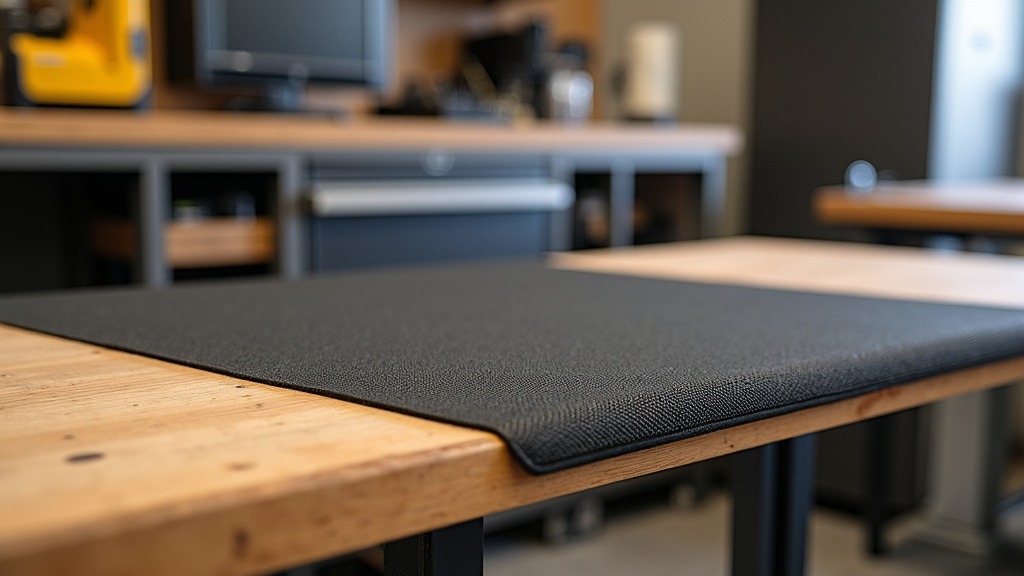
What to Look for in a Workbench Mat
When you’re shopping, keep a few key features in mind. You want a mat that will meet your specific needs and last.
Thickness and Density
A mat that’s too thin won’t provide enough cushioning. One that’s too thick or too soft might make you feel unstable. A good thickness is usually between 1/2 inch and 3/4 inch.
Density refers to how compressed the material is. A denser mat generally offers better support and durability. Look for mats with a good balance of thickness and density.
Surface Texture and Grip
You don’t want to slide around on your mat. Look for a textured surface that provides good traction. This is especially important if your feet might get damp or oily.
The bottom of the mat should also have a non-slip backing to keep it in place on the floor. A mat that moves is a hazard.
Durability and Material
Consider what kind of work you do. Will there be sharp objects, chemicals, or heavy tools around? Choose a material that can withstand your environment. Rubber and high-density foam are generally more durable options.
Check reviews to see how well the mat holds up over time. Some cheaper mats can start to break down quickly.
Size and Shape
Measure the space in front of your workbench. You want a mat that’s long enough to stand on comfortably as you move around. Most mats are rectangular, but some come in modular tiles that you can arrange.
Think about how much space you need. If you tend to shift your weight a lot or step back and forth, a longer mat is better. A mat that’s too small won’t offer much benefit.
A Quick Checklist for Choosing Your Mat
Here’s a quick rundown to help you pick the right mat:
- Measure your space: Know the area you need to cover.
- Consider your work: What hazards are present (water, oil, sharp objects)?
- Think about comfort: How long do you stand? Do you have existing pain?
- Check the thickness: Aim for 1/2 to 3/4 inch for good cushioning.
- Look for grip: Ensure both the top and bottom surfaces offer stability.
- Read reviews: See what other users say about durability and comfort.
Using Your Mat Effectively
Once you have your mat, make sure you use it correctly. Position it directly in front of where you stand most often.
If you move around a lot, a larger mat or interlocking tiles might be a better investment. The goal is to have the mat under your feet as much as possible while you’re working. Even small amounts of time standing on a hard surface can negate the benefits.
Keep your mat clean. Spills and debris can affect its texture and grip. Regular cleaning will help it last longer and remain effective. Many mats can be cleaned with soap and water.
“`Conclusion
Spending extended time at your workbench doesn’t have to mean sore feet and aching legs. An anti-fatigue mat provides that much-needed cushioning and support. It helps improve circulation and reduces strain, making your projects more comfortable and potentially more productive. Whether you’re a hobbyist or a professional, investing in the right mat is a simple way to care for your body. Don’t wait for discomfort to become a chronic issue; take a step towards a more comfortable workspace today by selecting a mat that fits your needs.
Frequently Asked Questions
How long does an anti-fatigue mat typically last?
The lifespan of an anti-fatigue mat depends on the material and how much it’s used. High-quality rubber or multi-layered mats often last several years, even with daily use. Foam mats might show wear sooner, especially with heavy traffic or sharp objects. Regular cleaning and proper care will help extend its life.
Can anti-fatigue mats help with existing back pain?
Yes, many users find that anti-fatigue mats can offer relief for back pain caused by prolonged standing. By providing a softer, more forgiving surface, the mat helps absorb shock and reduces the constant micro-adjustments your body makes to stay balanced. This can lessen the strain on your spine and lower back.
Are anti-fatigue mats safe for workshop environments with oil or water?
Many anti-fatigue mats, especially those made from rubber, are designed to be resistant to oil and water. Look for mats specifically marketed as being suitable for workshop or garage use. These often have textured surfaces for better grip and are easier to clean. Always check the product description for resistance details.
Is it worth spending more on a premium anti-fatigue mat?
For frequent workbench users, a more premium mat is often a worthwhile investment. These mats typically use better materials, offer superior cushioning and support, and are more durable. While cheaper mats offer basic comfort, higher-end options can provide longer-lasting relief and better ergonomic benefits.
Can I use an anti-fatigue mat outdoors at my workbench?
Most anti-fatigue mats are designed for indoor use on a flat, stable surface. Outdoor environments can expose the mat to weather, dirt, and uneven ground, which can shorten its lifespan and compromise its effectiveness. If your workbench is outdoors, consider a mat specifically designed for outdoor use or a more robust, easily cleanable material.