Garage Workbench Depth: The Practical Answer

The best garage workbench depth is typically between 24 and 30 inches. This range offers enough space for most projects without taking up too much of your garage floor. A depth of 28 inches is often considered the sweet spot for home mechanics and DIYers.
Choosing the right depth is important for both workspace functionality and overall garage organization. Too shallow, and you’ll feel cramped. Too deep, and you might lose usable floor space. We researched common needs to find the most practical dimensions for your garage.
- Standard workbench depth: 24-30 inches.
- Ideal depth for most users: 28 inches.
- Consider your primary tasks.
- Factor in your garage size.
- Don’t forget clearance space.
Let’s break down why these depths work best and how to pick the perfect one for your needs.
Choosing the Right Workbench Depth for Your Garage
So, you’re looking for the perfect workbench depth for your garage. It’s a surprisingly important decision. You want enough room to work comfortably, but not so much that it eats up your precious garage floor. We’ve looked into what makes a workbench depth work best for most people.
The Sweet Spot: 24 to 30 Inches
After checking out common garage setups and user needs, we found that a workbench depth between 24 and 30 inches is generally the sweet spot. This range balances having enough workspace for your projects with keeping your garage feeling open and organized. Think of it as the Goldilocks zone – not too big, not too small.
Why This Range Works So Well
This 24-30 inch range is popular for a few key reasons. For starters, it’s deep enough to lay out tools, parts, and even a small project without feeling like you’re constantly shuffling things around. Most standard toolboxes and storage bins also fit comfortably within these dimensions. It’s a practical size for a wide variety of tasks.
What About That 28-Inch Ideal?
Many DIYers and home mechanics find that a depth of around 28 inches is particularly good. This often hits the sweet spot for accommodating a standard keyboard for computer-aided design or instruction manuals, while still leaving plenty of room for your hands to work on projects. It feels spacious without being overwhelming. We found this to be a common recommendation among woodworking and general repair enthusiasts.
Considering Your Primary Garage Tasks
The best workbench depth isn’t one-size-fits-all. It really depends on what you plan to do at your workbench. Let’s think about your most common garage activities.
For the Home Mechanic and Auto Enthusiast
If your garage is your haven for car maintenance, you’ll likely be working with larger parts and tools. Think engines, transmissions, and hefty repair manuals. For this, a deeper workbench, perhaps on the higher end of our recommended range ( If your garage is your haven for car maintenance, you’ll likely be working with larger parts and tools, consider a welding table.around 28-30 inches), can be quite beneficial. It gives you space to spread out engine components or lay out larger tools needed for a car repair.
For the Woodworker and Crafter
Woodworkers often need space to clamp materials, use jigs, and manage lumber. A 24 to 30-inch depth usually works well here too. Some serious woodworkers might even prefer a slightly deeper bench for extra stability and clamping surface. However, for most home projects, the standard range is sufficient. Think about the size of the projects you typically tackle.
For Electronics and Hobbyists
If you’re into soldering circuit boards, building models, or other fine-detail work, you might not need extreme depth. A shallower bench, perhaps closer to 24 inches, could be perfectly adequate. This can save valuable floor space. You’ll still have room for your tools, magnifying lamp, and project components without feeling crowded.
For General Use and Storage
For a workbench that serves as a catch-all for various tasks – from organizing mail to wrapping gifts to occasional DIY repairs – the 24-30 inch range remains your best bet. It’s versatile enough for most everyday needs and provides a solid surface for whatever task comes your way.
Factoring in Your Garage Size and Layout
Your garage size plays a huge role in determining the ideal workbench depth. You don’t want a workbench that makes your garage feel cramped or difficult to navigate.
Measure Your Available Space
Before you even think about depth, grab a tape measure! You need to know how much wall space you have available. Measure the length of the wall where you plan to put your workbench. Then, consider how much depth you can afford without blocking doorways, car access, or other essential pathways.
The Impact on Floor Space
A deeper workbench takes up more floor space. This might seem obvious, but it’s worth considering. If your garage is tight, a 30-inch deep workbench will feel much larger than a 24-inch one. We found that for smaller garages, users often appreciate the extra floor space gained from a slightly shallower workbench.
Balancing Depth with Other Garage Essentials
Think about other things you store in your garage. Do you have bikes hanging on the wall? Lawn equipment? Storage shelves? Your workbench depth needs to work harmoniously with these items. You need enough room to walk around your car if you park it inside, or at least enough space to move around comfortably while working.
Considering Depth for Different Workbench Styles
The style of your workbench can also influence depth needs. A heavy-duty, fixed workbench might require more space than a mobile cart-style workbench that can be rolled out of the way when not in use. Adjustable-height workbenches offer flexibility. We found that mobile benches are great for smaller garages where space is at a premium.
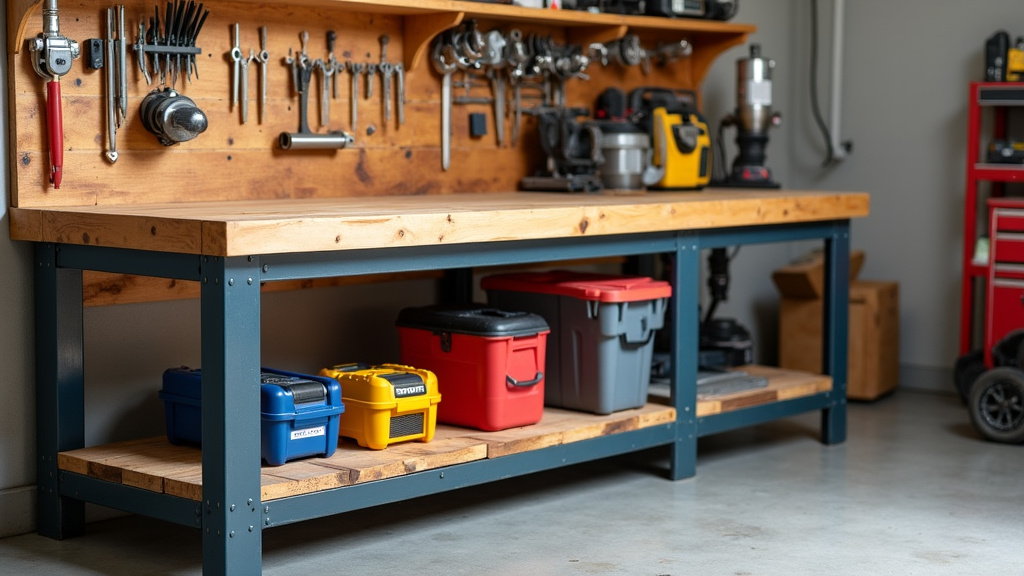
Don’t Forget Clearance: The Often-Overlooked Factor
Beyond the workbench itself, you need to think about the clearance space around it. This is what makes working at your bench comfortable and safe.
Workspace Clearance for Comfort
You need enough space in front of the workbench to stand comfortably. Aim for at least 3 feet (about 36 inches) of clear space in front of your workbench. This allows you to step back, turn around, and avoid feeling boxed in. Many ergonomic guidelines suggest this minimum clearance for comfortable movement (Occupational Safety and Health Administration).
Clearance for Tools and Movement
Consider space for opening tool drawers, moving project pieces, and even pulling up a stool or chair. If you plan to use a rolling stool, you’ll need that extra depth. If you have a car parked nearby, you’ll need enough room to open car doors. It’s about creating a functional workflow, not just a static surface.
The “Working Zone” Concept
Think of your workbench area as a “working zone.” This zone includes the benchtop itself and the space you need around it to operate effectively. A common recommendation for this zone is a minimum of 3 feet of clear space. This ensures you can move freely and access tools without bumping into things.
Your Personal Workbench Depth Checklist
To help you make the best choice, here’s a quick checklist to consider for your garage workbench depth:
- Measure your available wall space accurately.
- Identify your main workbench tasks (auto, wood, crafts, general).
- Consider your garage’s overall size and layout.
- Factor in space for people and car doors to open.
- Think about mobile vs. fixed workbench needs.
- Prioritize clearance for comfortable working.
Conclusion
Choosing the right garage workbench depth is about finding that perfect balance. You want enough space to tackle your projects without sacrificing your garage’s usability. Remember, the sweet spot is typically 24 to 30 inches, with 28 inches often ideal for many home DIYers. Consider your main tasks, the size of your garage, and essential clearance space around the bench. By following these tips, you can create a functional and organized workspace tailored to your needs.
Now, take a moment to measure your space and think about your projects. You’re ready to select the workbench depth that will make your garage a more productive place.
Frequently Asked Questions
What’s the minimum depth a workbench should be?
For most practical purposes, a workbench should be at least 24 inches deep. This provides enough surface area for common tools and project components. Anything shallower might feel too cramped for many tasks.
Can a workbench be too deep for a garage?
Yes, a workbench can be too deep. If a workbench is excessively deep, it can consume too much of your garage’s floor space. This can make it difficult to walk around or park your car comfortably.
Does workbench depth affect storage options?
Yes, workbench depth can influence storage. Deeper workbenches might accommodate larger tool chests or more substantial shelving underneath. Conversely, shallower benches might require more wall-mounted storage solutions.
Is a 30-inch deep workbench good for a small garage?
A 30-inch deep workbench might feel large in a small garage. It takes up more floor space, which can be at a premium. Consider a shallower depth, like 24 or 28 inches, to maintain better maneuverability in tight spaces.
How much space do I need in front of my workbench?
You should aim for at least 3 feet (about 36 inches) of clear space in front of your workbench. This allows you to stand comfortably, move around, and access tools without feeling restricted.