How Thick Should a Workbench Top Be? Key Numbers

The ideal workbench top thickness depends on its intended use, but most DIYers find 1.5 to 2 inches perfectly adequate for general tasks. For heavy-duty projects, you might want to go thicker, up to 3 inches, for maximum stability. Choosing the right thickness ensures your workbench can handle your projects without wobbling or cracking.
When you’re planning your workbench, the top is a huge part of its personality. A thicker top means a more robust surface. It can support heavier loads and absorb more vibration. Think about the kinds of projects you’ll tackle; woodworking, metalworking, or just general repairs all have different demands on your workbench’s sturdiness.
- A 1.5 to 2-inch top is great for most household tasks.
- For heavier work like woodworking or metal fabrication, aim for 2 to 3 inches.
- Consider the type of projects you’ll do.
- A thicker top provides more stability and durability.
Let’s get into the specific measurements and why they matter for your workshop. We’ll help you choose the perfect thickness for your needs.
Choosing the Right Workbench Top Thickness
Finding the ideal workbench top thickness is about balancing stability, cost, and your specific needs. It’s not a one-size-fits-all answer. We’ll help you navigate the numbers so you can build a workbench that’s perfect for your projects.
Understanding the Impact of Thickness
Why does thickness matter so much? A thicker top means a more solid foundation for your work. It absorbs vibrations better and can support heavier loads without flexing or bowing. Think of it like this: a thin piece of wood might wobble if you lean on it, but a thick slab feels sturdy and reliable. That’s the kind of performance you want from your workbench.
Stability and Vibration Dampening
When you’re hammering, sawing, or even just leaning on your workbench, you want it to stay put. A thicker top adds significant weight and mass. This mass helps to dampen vibrations. Less vibration means more precision in your work. It also makes the workbench feel more substantial and less likely to skitter across the floor.
Load Capacity
Are you planning to build a hefty piece of furniture? Do you work with heavy metal components? A thicker workbench top can handle more weight. It distributes the load more effectively across the base. This prevents the top from sagging over time, especially if you’re working with dense materials.
Key Thickness Measurements for Your Workbench Top
Let’s get down to the numbers. Different thicknesses offer different benefits. We’ve researched common recommendations to help you make an informed choice.
The 1.5-Inch Sweet Spot
For many hobbyists and DIYers, a 1.5-inch thick top is often sufficient. This is commonly achieved by laminating two 3/4-inch plywood sheets together. It’s a budget-friendly option. It provides a decent surface for general household repairs, crafting, or light woodworking. You get good rigidity for the cost.
Pros of a 1.5-Inch Top
- Cost-effective: Plywood is readily available and affordable.
- Lightweight: Easier to move or assemble if needed.
- Adequate for light tasks: Good for general repairs and hobbies.
Cons of a 1.5-Inch Top
- Limited load capacity: May not be suitable for very heavy projects.
- More vibration: Can transmit more shock from impacts.
- Potential for flexing: Long spans might sag under pressure.
The 2-Inch Standard for Most DIYers
Stepping up to a 2-inch thick top is a popular choice. This often means using two layers of 3/4-inch plywood or a single piece of thicker hardwood, like a butcher block. A 2-inch top offers a noticeable improvement in stability. It’s a great middle-ground for a wide range of projects.
Why 2 Inches Works Well
- Enhanced stability: Less wobble and movement during use.
- Better vibration control: Absorbs more shock from tools.
- Good load bearing: Handles moderate to heavy-duty tasks.
Going Thicker: 3 Inches and Beyond for Heavy Duty
If your work involves heavy machinery, metal fabrication, or you simply want the ultimate in stability, consider a top that’s 3 inches thick or more. This usually involves thicker hardwood slabs or multiple layers of plywood laminated together. You might even see professionals using incredibly thick butcher block tops.
Benefits of a 3-Inch+ Top
- Maximum stability: Essential for high-impact work.
- Superior vibration dampening: Ideal for tools that shake.
- Highest load capacity: Can support significant weight.
Considerations for Thicker Tops
- Cost: Thicker hardwoods or more material increase expenses.
- Weight: These tops can be very heavy, making them hard to move.
- Availability: Finding single slabs of wood this thick can be challenging.
Material Matters: How It Affects Thickness Choices
The material you choose for your workbench top also influences how you approach thickness. Each has its own properties.
Plywood Options
You’ll often see workbenches made from multiple layers of plywood. Two layers of 3/4-inch plywood are common for a 1.5-inch total thickness. For a 2-inch top, you might use two layers of 3/4-inch and one layer of 1/2-inch, or simply two thicker sheets if available. High-quality birch or maple plywood offers better strength and a smoother surface than standard construction-grade plywood (National Woodworking Association). You’ll want to ensure the edges are finished neatly, as exposed plywood edges can be prone to damage.
Hardwood and Butcher Block
Solid hardwood boards glued together, often called butcher block, offer a very durable and attractive surface. A common thickness for pre-made butcher block countertops is around 1.5 inches. However, you can often find or create thicker versions. For heavy-duty work, a 2-inch or 3-inch solid hardwood top is fantastic. Maple, oak, and beech are popular choices due to their density and hardness. They resist dents and scratches well.
MDF and Other Materials
Medium-density fiberboard (MDF) can be used, often layered. A double-layer top of 3/4-inch MDF gives you a 1.5-inch thickness. While MDF offers a very flat and smooth surface, it’s not as durable or moisture-resistant as plywood or hardwood. It can swell if exposed to water. Many recommend using it as a sub-layer beneath a more durable material like hardboard or metal for a workbench top (Woodworkers Journal).
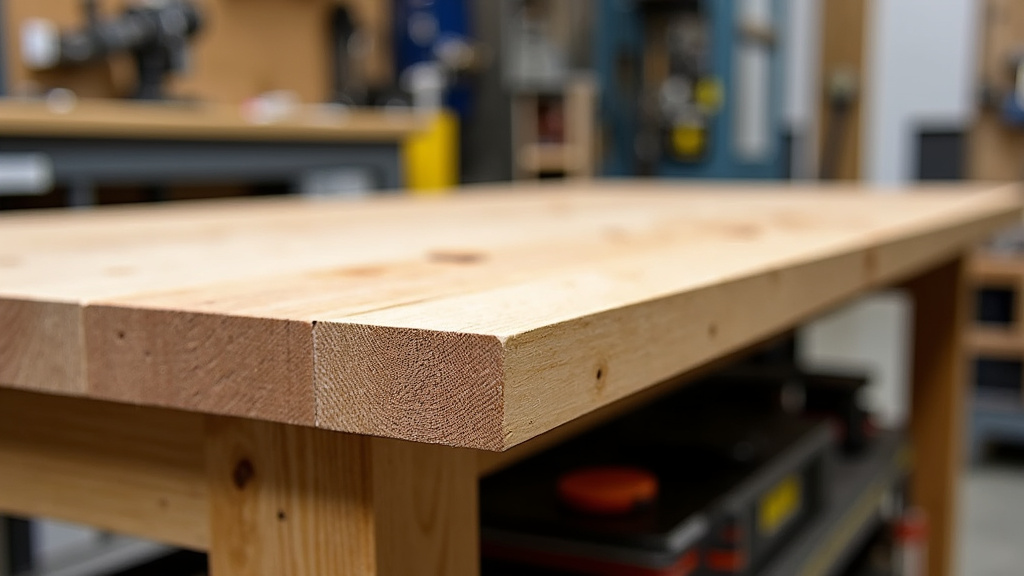
Project Type Checklist: What Thickness Do You Really Need?
To help you decide, consider the types of projects you’ll be doing. Ask yourself these questions:
- Will you be doing a lot of hammering and chiseling?
- Do you plan to use heavy vices or clamps?
- Will you be working with metal or very dense wood?
- Is vibration from power tools a major concern?
- Are you on a tight budget, or can you invest more in the top?
Comparing Thicknesses: A Quick Look
Here’s a table summarizing the typical uses for different workbench top thicknesses. This should give you a clear visual guide.
| Thickness | Primary Use Cases | Pros | Cons |
|---|---|---|---|
| 1.5 inches | Light DIY, crafts, general repairs, hobby work. | Affordable, lighter, easy to build. | Less stable, more vibration, lower load capacity. |
| 2 inches | General woodworking, mechanics, moderate DIY, most home projects. | Good balance of stability and cost, handles moderate loads. | Heavier than 1.5″, requires more material. |
| 3 inches+ | Heavy fabrication, metalworking, precision tasks, industrial use. | Maximum stability, minimal vibration, highest load capacity. | Expensive, very heavy, can be difficult to source materials. |
Final Thoughts on Workbench Top Thickness
Choosing the right thickness for your workbench top is a key step in building a tool that will serve you well. For most people, a 2-inch thick top hits that sweet spot. It offers a solid, stable surface without breaking the bank or becoming too unwieldy. If you’re on a tighter budget or only do very light tasks, 1.5 inches might suffice. If you’re a professional or have demanding projects, investing in a 3-inch or thicker top is a wise decision. Your workbench is an investment in your craft, so give its top the thickness it deserves!
Conclusion
You’ve learned that the ideal workbench top thickness isn’t a single number. It truly depends on what you plan to build and use your workbench for. For most general tasks and hobbyists, a 2-inch thick top offers an excellent balance of stability, durability, and cost. If your projects are lighter or your budget is tight, 1.5 inches might work. For serious fabrication and heavy-duty work, consider going thicker, 3 inches or more. Take a moment to assess your typical projects, and choose the thickness that will best support your craft for years to come. Now, it’s time to gather your materials and get building!
Frequently Asked Questions
What is the most common workbench top thickness for DIYers?
Research shows that a 2-inch thick workbench top is the most common choice for DIYers. This thickness provides a good blend of stability for most projects, like general woodworking and repairs, without being overly expensive or difficult to build.
Can a 1.5-inch thick workbench top handle heavy tools?
A 1.5-inch top is generally sufficient for lighter tasks and hand tools. However, for heavy power tools or any work that involves significant impact or vibration, you’ll likely find it offers less stability and may not be robust enough. It’s best suited for less demanding activities.
What material is best for a thick workbench top?
For thicker tops, solid hardwoods like maple or oak, often in a butcher block style, are excellent choices for durability and density. High-quality, multi-layered plywood (like birch or maple) is also a practical option for achieving thicker dimensions affordably.
How does thickness affect workbench stability?
Thickness directly impacts stability because a thicker top adds more mass and rigidity. This increased mass helps to dampen vibrations from hammering or power tools and prevents the surface from flexing or wobbling when you apply pressure or place heavy items on it.
Should I worry about the weight of a thick workbench top?
Yes, thicker workbench tops are significantly heavier. While this added weight contributes to stability, it can make assembly, moving, or repositioning the workbench more challenging. If you anticipate needing to move your workbench often, consider the weight implications of a thicker top.