What Is an Outfeed Table? What to Expect
On this page (9 sections)
- Understanding the Outfeed Table’s Core Purpose
- Exploring the Main Types of Outfeed Tables
- Critical Features to Compare When Shopping
- Measuring for the Right Fit in Your Shop
- What Benefits Can You Realistically Expect?
- Your Simple Outfeed Table Setup Checklist
- Making Your Workshop Safer and Smarter
- Conclusion
- Frequently Asked Questions
An outfeed table is a support surface placed at the end of your table saw to safely catch cut pieces as they exit the blade. It prevents offcuts from falling to the floor, which improves both safety and your workflow. Most are adjustable to match your saw’s table height.
Think of it as an essential extension of your saw’s workspace. It gives long boards or plywood sheets a place to land instead of tipping over. We found that this simple addition can significantly reduce your risk of kickback and awkward reaches. It’s a key component for a functional workshop.
- An outfeed table catches cut material as it leaves the table saw blade.
- Its main benefit is improving safety by preventing offcuts from falling.
- It also makes handling large sheets easier and more stable.
- Key features to look for include height adjustability and a sturdy, flat surface.
- Choosing one involves matching it to your saw’s size and your workshop space.
Below, we’ll break down exactly what to look for in an outfeed table, how to choose the right one, and what benefits you can really expect. Let’s walk through the details together.
Understanding the Outfeed Table’s Core Purpose
An outfeed table is your table saw’s trusted partner. Its main job is to support wood as it passes the blade. Without one, you’re often left trying to hold long boards awkwardly. This creates a real safety hazard.
Imagine cutting a long piece of plywood. As you push it through the saw, the weight starts to hang off the back of the saw table. This is unstable. An outfeed table acts like a second set of hands. It catches and supports that material instantly.
How It Protects You and Your Material
The primary benefit is preventing dangerous offcuts from falling. When a piece drops to the floor, you might lunge to catch it. This moves your body and hands toward a spinning blade. The CDC notes that improper work positioning is a common factor in workshop injuries.
A stable surface also means cleaner cuts. If the wood tips or sags as you finish the cut, it can bind against the blade. This can cause kickback. An outfeed table keeps the cut line straight and true all the way through.
Improving Your Workshop Workflow
Beyond safety, it simply makes your day easier. You can make longer rip cuts without stopping mid-process. There’s no need for a second person to hold the outboard end. This lets you work more independently and confidently.
Exploring the Main Types of Outfeed Tables
You’ll find two broad categories: portable and permanent. The right choice depends on your space and how often you use your saw. Let’s break them down.
Folding and Portable Models
These are great for small shops or shared spaces. They typically fold flat and lean against a wall. Many attach directly to your table saw’s rails. When not in use, they disappear.
- Pros: Space-saving, affordable, easy to store.
- Cons: Can be less rigid, may need setup each time.
Fixed or Permanent Installations
This is a dedicated workbench or table. For more on assembly tables, see assembly tables. It sits at the exact height of your saw. It becomes a permanent part of your shop layout. These are often larger and more sturdy.
- Pros: Extremely stable, can double as an assembly table.
- Cons: Uses up more floor space, not movable.
| Type | Best For | Space Needed |
|---|---|---|
| Folding/Portable | Small shops, occasional use | Minimal (stores flat) |
| Fixed/Permanent | Large shops, daily woodworkers | Permanent floor space |
Critical Features to Compare When Shopping
Not all outfeed tables are built the same. You want to look for specific features that ensure it works well with your saw. Here’s what matters most.
Adjustability is Non-Negotiable
Your outfeed table must be perfectly level with your saw table. Even a small gap can catch wood. Look for tables with fine-adjustment legs. This lets you dial in the height precisely, even on an uneven floor.
Surface Material and Flatness
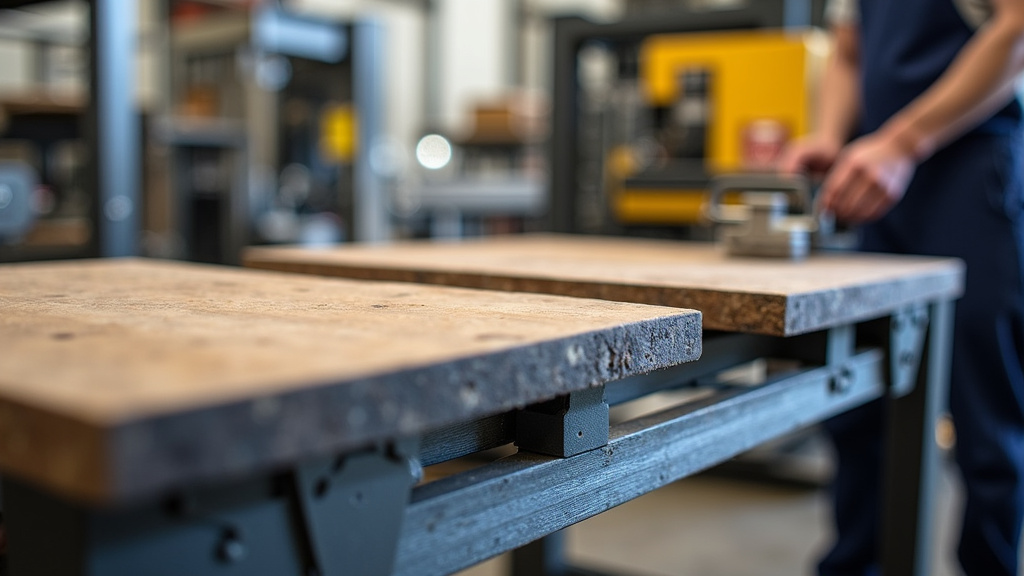
The top needs to be flat and smooth. Melamine-coated particle board is a common, affordable option. It’s slick and lets wood slide easily. Some use durable laminate. Avoid tables with a warped or textured surface.
Why Flatness Matters So Much
If the outfeed surface is higher or lower than the saw, it creates a lip. This lip can stop your wood dead. It ruins your cut and can cause a dangerous reaction. A consistently flat surface is key to safety.
Measuring for the Right Fit in Your Shop
Purchasing involves more than just picking a model. You need to measure your space and your saw. First, check the height of your table saw’s deck. This is your target height for the outfeed.
Next, consider the depth. The table should extend back far enough to support your longest common rip cut. For full sheets of plywood, a width that matches your saw’s table is ideal. Measure your available floor space to ensure doors and drawers can still open.
What Benefits Can You Realistically Expect?
With the right setup, the changes are immediate. You’ll notice less strain on your back. You won’t be fighting gravity to keep long boards level. The process feels more controlled and less frantic.
Easier Handling of Large Sheet Goods
Sheet goods like plywood are notoriously unwieldy. One person often can’t handle them safely on a table saw alone. An outfeed table provides the necessary support to manage these sheets yourself. It transforms a two-person job into a manageable solo task.
A Smoother, More Efficient Process
Workflow improves dramatically. You can take your time setting up cuts without worrying about the board falling. We found that woodworkers often report completing projects faster. There’s less time spent repositioning material between cuts.
Your Simple Outfeed Table Setup Checklist
Ready to get yours set up? Here’s a quick checklist to ensure everything goes smoothly.
- Measure twice: Confirm your saw’s table height and your available space.
- Check for adjustability: Ensure you can fine-tune the height for a perfect match.
- Test the surface: Verify it’s flat and slick so material glides, not catches.
- Ensure stability: Give it a shake test. It should feel solid, not wobbly.
- Plan for use: Decide if you need it to fold away or be permanent.
- Practice first: Make some test cuts with scrap wood to build confidence.
Making Your Workshop Safer and Smarter
An outfeed table isn’t a fancy upgrade; it’s a fundamental tool for safety. It addresses a common point of failure in table saw use. By supporting material properly, you protect yourself from kickback and falls.
The right table for you depends on your work style and space. Prioritize height adjustability and a flat surface above all else. A little research upfront pays off in years of safer, more enjoyable woodworking.
You’re not just adding a table. You’re creating a more supportive environment. That peace of mind is worth every penny. Now you can focus on what matters: building something great with your own hands.
Conclusion
An outfeed table is a simple, powerful addition that directly addresses a major safety and workflow challenge at the table saw. The key takeaways are clear: it provides essential support to prevent offcuts from falling, which reduces kickback risk and strain. When shopping, your top priorities should be a perfectly flat surface and precise height adjustability to match your saw. This ensures a smooth, safe cut from start to finish. Your best next step is to measure your saw’s table height and your available workshop space. That simple information will put you on the right path to choosing the perfect fit for a safer shop.
Frequently Asked Questions
Do I really need an outfeed table for a jobsite table saw?
While not always mandatory, a jobsite saw benefits greatly from an outfeed table, especially if you cut full sheets of plywood or long boards. The extra support becomes critical for safety and cut quality when working with larger materials away from your main shop. A portable, folding model is an excellent, space-saving choice for jobsite setups.
Can I build my own outfeed table instead of buying one?
Yes, building a DIY outfeed table is a popular and cost-effective project for many woodworkers. The most important factors to get right are achieving a perfectly flat surface and ensuring it is exactly level with your saw table. Use sturdy materials and include fine-adjustment legs to dial in the height perfectly.
What’s the most common mistake people make with an outfeed table?
The biggest mistake is not ensuring it is perfectly flush with the saw’s table. Even a small height difference creates a lip that can catch wood, ruin your cut, and create a safety hazard. Always prioritize tables with fine-adjustment legs to solve this.
How wide should my outfeed table be?
For optimal support, the width should ideally match the width of your table saw’s surface. This provides the most stability, especially when cutting large sheet goods. If space is tight, it can be narrower, but be mindful that wide cuts will lack full support on the edges.
Will an outfeed table work with a cabinet saw or contractor saw?
Absolutely. Outfeed tables are designed to complement any standard table saw. The critical factor is matching the height of your specific saw’s table deck. Most aftermarket tables are highly adjustable, and custom-built solutions are easily tailored to any saw’s specifications.