Workbench Size for Hand Tool Woodworking
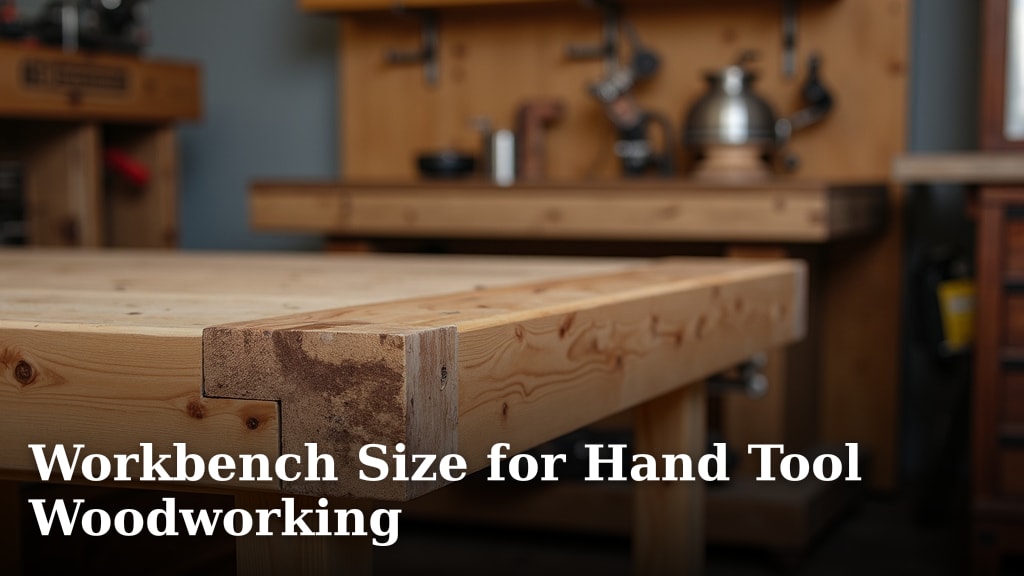
Choosing the right Choosing the right workbench size for your hand tool woodworking can be informed by understanding what makes a garage workbench suitable.workbench size for your hand tool woodworking depends on your available space and the types of projects you plan to build. A good rule of thumb is to have enough surface area for your largest planned workpiece, plus room for your tools and your own body. Don’t worry, we’ll help you figure it out!
Many beginner woodworkers worry about getting the workbench size wrong. Too small, and you’ll feel cramped. Too large, and it might overwhelm your workshop. We’ve found that balancing functionality with practicality is key. Consider how you’ll move around it and store it, too.
- The best workbench size fits your projects and space.
- Aim for enough surface for your largest work and tools.
- Think about your workshop’s layout and your movement around the bench.
- It’s better to be slightly too big than too small for hand tool work.
Let’s get a clearer picture of what workbench size works best for hand tool woodworking and how to pick the perfect one for your needs.
“`htmlFinding the Right Workbench Dimensions for Your Woodworking Projects
So, you’re ready to get serious about hand tool woodworking. That’s fantastic! One of the biggest questions you’ll face is: what size workbench do I actually need? It’s not as simple as picking the first one you see. We’ve found that the perfect workbench size depends heavily on your projects and the space you have.
Think of your workbench as the stage for your creations. If the stage is too small, your actors (tools and workpieces) won’t have room to move. If it’s too big, it might just get in the way of everything else. We want to help you find that sweet spot where you have plenty of room to work without feeling cramped.
How Project Size Dictates Workbench Width and Depth
The first thing to consider is the size of the projects you plan to build. Are you making tiny jewelry boxes or a full-sized dining table? This will be your biggest guide.
What’s the Largest Piece You’ll Build?
If you’re mostly working on smaller items like decorative boxes, birdhouses, or small cabinet doors, a narrower bench might be perfectly fine. For these, a depth of 24 inches might suffice. However, if you plan to build larger pieces like bookshelves, chairs, or even a small desk, you’ll need more surface area.
Many woodworking projects involve pieces that are longer than they are wide. Think about the longest board you might need to plane or joint by hand. A common recommendation from woodworking experts is to have a bench at least 12 inches longer than your longest anticipated workpiece. This gives you room to secure the piece and still have space to operate your tools.
Depth: More Than Just Side-to-Side
Workbench depth is just as important as width. A deeper bench allows you to work on larger panels and gives you more space for vises and holdfasts. For hand tool woodworking, we’ve found that a depth of around 30 inches is a good starting point for most hobbyists. This depth allows for a good working area and sufficient space for vises mounted on the side or end.
However, if your projects consistently involve very wide pieces, like large table tops or cabinet backs, you might benefit from a deeper bench, perhaps 36 inches or even more. Just remember that reaching across a very deep bench can become tiring. You want to be able to comfortably reach all areas of your workbench.
Your Workshop Space: The Ultimate Constraint
Now, let’s talk about the room you have. It’s easy to dream of a massive workbench, but if it doesn’t fit your workshop, it’s just a dream. We always advise measuring your available space before you even start designing or buying.
Measuring Your Available Area
Take out your tape measure! How much floor space do you have for the bench itself? Don’t forget to account for the space you’ll need to walk around it. You’ll need room to stand on all sides, especially the front where you’ll be doing most of your work. A good rule of thumb is to leave at least 3 feet of clearance around the sides and front of your workbench.
Consider the height of your ceiling, too. While this rarely impacts workbench size, it can affect how you position it or if you add any overhead storage. For hand tool work, being able to stand comfortably is key.
Considering Layout and Workflow
How will you move around your workshop? Will the workbench be against a wall, in the center of the room, or in a corner? Each position has its advantages and disadvantages regarding space. A bench in the center gives you access from all sides, but it requires more open space.
Think about the workflow. Where will you store your lumber? Where will your tools be located when not in use? If your workbench is too large, it can block access to other essential areas or create a cluttered, inefficient space. We found that a well-planned layout makes woodworking much more enjoyable.
Standard Workbench Sizes and What They Mean
When you look at pre-made workbenches or plans, you’ll see common dimensions. Understanding these can help you make a decision. Many are designed with general woodworking in mind, but we can adapt these for hand tool use.
Common Dimensions and Their Suitability
You’ll often see workbenches advertised with widths of 4, 6, or even 8 feet. Depths typically range from 24 to 36 inches.
| Workbench Size (Width x Depth) | Best For | Considerations for Hand Tools |
|---|---|---|
| 4 ft x 24 in | Very small spaces, hobbyists, limited project scope. | May feel cramped for anything but the smallest projects. Tool storage is key. |
| 5 ft x 30 in | Good all-around size for many hobbyists, balanced. | Offers decent space for most hand tool projects. Ample room for vises. |
| 6 ft x 30 in | More extensive projects, dedicated shop space. | Provides excellent working surface for larger pieces and tools. |
| 6 ft x 36 in | Very large projects, professional shops, maximum stability. | Deepest option, ideal for securing large workpieces. Ensure you can reach comfortably. |
For hand tool woodworking, we often lean towards benches that are a bit deeper than might be recommended for power tool users. This extra depth helps with clamping and stability. A 5-foot or 6-foot bench with a 30-inch depth is a very popular and practical choice for many home woodworkers.
The “Too Small” Problem: Why Bigger is Often Better
We cannot stress this enough: it is far easier to work around a bench that’s slightly too large than one that is too small. A bench that’s too small will limit your project scope and make tasks like sawing, planing, or chiseling incredibly frustrating. You’ll constantly be repositioning your work or worrying about it falling off.
A larger surface area means you can lay out your tools and your workpiece without feeling like you’re playing a game of Tetris. This improved workflow leads to better accuracy and more enjoyable woodworking sessions. Many experienced woodworkers recommend building the largest bench your space can comfortably accommodate. It’s an investment in your hobby.
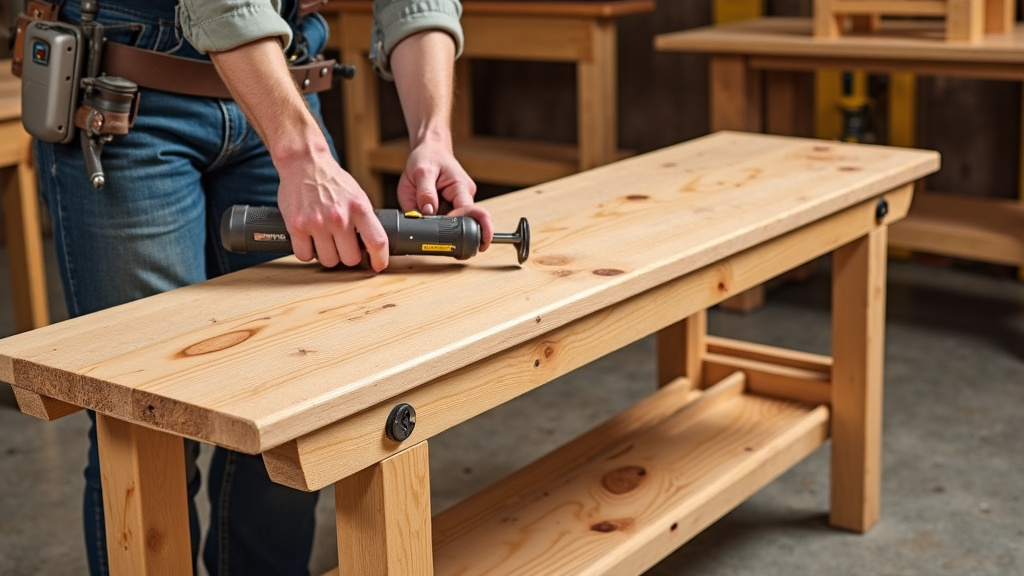
Workbench Height: Comfort is Key for Hand Tools
While we’re talking size, let’s not forget height. The correct workbench height is crucial for comfort and ergonomics, especially when using hand tools. You’ll be doing a lot of standing and repetitive motions.
Finding Your Ergonomic Sweet Spot
The ideal workbench height is generally just below your belt buckle or roughly at the height of your bent elbow. This allows you to use your body weight effectively when planing or chopping with chisels. We’ve found that a height of 32-36 inches is a good range for most people.
However, this can vary based on your height and the specific tasks you perform. If you do a lot of planing, you might want it slightly lower to use more body weight. If you do a lot of fine detail work where you need to see clearly, a slightly higher bench might be better. The best advice is to test it out if you can. Try mimicking woodworking motions at different heights to see what feels most natural and comfortable for you.
Checklist: How to Decide on Your Workbench Size
Feeling a bit overwhelmed? Don’t worry! Let’s break it down into a simple checklist. Follow these steps to determine the right workbench size for your needs.
- Assess your largest typical workpiece – what’s the longest and widest?
- Measure your available workshop space, including clearance for movement.
- Consider your primary woodworking projects – what do you *want* to build?
- Think about your height and posture – will the bench height be comfortable?
- Prioritize stability and usability over squeezing in every last inch of space.
- Err on the side of slightly too large if your space allows – you’ll thank yourself later.
Conclusion
Finding the right workbench size is all about balancing your woodworking aspirations with your available space. We’ve learned that your project scope and your workshop’s layout are your biggest guides. Remember, it’s far better to have a bit more surface area than you initially think you need. This extra room will make tasks easier and your woodworking more enjoyable. Now, take those measurements, consider your projects, and build or buy the workbench that will serve you well for years to come.
Frequently Asked Questions
What is the minimum recommended workbench depth for hand tool work?
For most hand tool woodworking, a workbench depth of around 30 inches is a good starting point. This depth offers enough space for vises and comfortably accommodates larger workpieces while allowing you to reach across the surface easily.
How much space do I really need around my workbench?
You’ll want at least 3 feet of clearance on the sides and front of your workbench. This space is essential for comfortable movement, accessing your tools, and repositioning larger workpieces without feeling confined.
Is a 4-foot workbench too small for most woodworking projects?
A 4-foot workbench can be limiting, especially if you plan on building anything larger than small decorative items. While it can work for very compact spaces, you’ll likely find yourself wishing for more surface area for tool layout and workpiece stability.
Should my workbench height be adjustable?
While not strictly necessary, an adjustable height workbench can be beneficial if multiple people use it or if you perform a wide range of tasks. However, finding a fixed height that’s comfortable for your primary woodworking motions is often sufficient.
What’s more important: width or depth for a hand tool workbench?
Both width and depth are important, but for hand tool work, a good depth (around 30 inches) is often prioritized for stability and clamping options. Ensure the width can accommodate your longest workpieces with room to spare for tools.