How to Choose Metal for a Welding Table Top
Steel is the practical starting point for most welding table tops because it is widely used for fabrication and can take heat and clamping. Choose the metal and thickness around your work, then check flatness, surface needs and how you plan to attach fixtures.
On this page (8 sections)
- What metal is best for a welding table top?
- How do common tabletop metals compare?
- How thick should the metal top be?
- Should a welding table top have holes?
- Which table options fit these material needs?
- How can you keep a welding table flat?
- What else should you consider before choosing the metal?
- Which metal should you choose for your welding table top?
The best metal for a welding table top is usually steel for general fabrication because it offers a familiar surface for clamping and fixture work. Choose thickness, flatness and surface features to match your projects, and consider stainless steel, cast iron or aluminum when their specific trade-offs fit your work.
A table top also needs support underneath. A flat plate can warp if its frame does not support it well, and a thick top can still arrive or become uneven.
If you are deciding between a complete table and a separate surface, our guide to the best welding table top plate can help you compare the plate options.
What metal is best for a welding table top?
Steel is the usual starting point for a general-purpose welding table top. It is common in fabrication tables, supports fixture setups and works for many repair and shop projects.
A steel table is not automatically the right choice for every task. Think about the metals you weld, whether the surface needs holes, how often you move the table and whether you need a corrosion-resistant top.
The metal affects how the top handles heat, clamping, surface wear and maintenance. The frame, plate thickness and fabrication quality affect how well the whole table stays flat.
How to choose the best metal for a welding table top
Start with the work you do most often. A table for steel repairs has different needs from a clean assembly surface or a dedicated aluminum-welding area.
Then check four things:
- Flatness: The surface should support accurate fit-up. Ask how the top is made and supported, and inspect it with a straightedge if you can.
- Thickness and support: A thicker plate can resist bending, but the frame and support spacing matter too.
- Conductivity: Metals move heat at different rates. That affects how quickly the work area heats up and how heat spreads through the top.
- Fabrication needs: Decide whether you need fixture holes, a smooth surface, replaceable plates or a top you can drill and modify.
For more about the table itself and the role it plays in a shop, see What Is a Welding Table? Straight Answers.
How do common tabletop metals compare?
Steel suits many general welding jobs, while stainless steel, cast iron and aluminum solve narrower needs. The right choice depends on how you balance heat, surface condition, weight and fabrication.
| Metal | Flatness and rigidity | Heat and conductivity | Fabrication and care |
|---|---|---|---|
| Mild steel | Common option; quality and support affect flatness | Handles typical welding heat, but heat can distort a poorly supported plate | Familiar to fabricate, clamp and modify |
| Stainless steel | Can offer a clean, corrosion-resistant surface | Conducts heat differently from mild steel; control heat for the work | Higher material cost may matter; keep surface clean when avoiding contamination |
| Cast iron | Can be rigid and stable | Can crack from thermal shock | Heavy and less convenient to drill or alter |
| Aluminum | Light, but can dent or mark | Conducts heat quickly and can be damaged by welding heat | Useful for certain aluminum work, but not a default steel-welding surface |
These are broad material trade-offs, not guarantees about every plate. Alloy, thickness, support design and fabrication all influence performance.
Is mild steel a good table top?
Mild steel is a practical choice for a general welding table, especially when your projects involve steel fabrication and common clamps or fixtures. It is familiar to welders and can be cut, drilled or repaired using standard shop processes.
A steel plate can still warp from concentrated heat or weak support. Keep the top clean, avoid leaving hot work in one spot longer than needed and inspect the frame and plate if flatness matters to your work.
When does stainless steel make sense?
Stainless steel can make sense when corrosion resistance or a cleaner work surface is a priority. It may also help when you want to reduce the chance of ordinary steel particles contaminating stainless work.
It is not a universal upgrade. Keep tools and abrasives used on stainless separate from those used on mild steel when surface contamination matters, and weigh the added material cost against your actual shop needs.
Is cast iron worth considering?
Cast iron can suit a heavy table that stays in one place and needs a rigid surface. Its weight can make moving the table harder, and sudden temperature changes can crack it.
Plan holes and fixture locations before choosing cast iron. It is not as convenient as steel when you expect to drill, cut or modify the top later.
Should you use aluminum for the top?
Aluminum is a specialized choice, not the default for a table used to weld steel. It is light and transfers heat readily, which can help in some setups but also means the surface can heat up and suffer damage.
Use it when your work specifically benefits from an aluminum surface and you can manage the heat and wear. For a mixed-use fabrication shop, steel is often the simpler material to work around.
How thick should the metal top be?
Choose the thickest top your frame and budget support without ignoring the table’s overall design. Thickness can help resist bending, but a heavy plate needs a frame that supports it across the work area.
The right thickness depends on the loads you expect, how hard you clamp and whether the table has legs, a bench base or casters. A thin plate on a well-supported frame may work for light jobs, while heavy fit-up calls for more attention to stiffness.
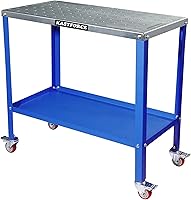
For example, the KASTFORCE KF3002 has a 10-gauge, 2.8 mm top and a stated load capacity of 1,200 lb. The Klutch table has a 4 mm steel top and a stated capacity of 600 lb, showing why top thickness alone does not describe the full table.
A plate’s nominal thickness also does not tell you whether its surface is flat. Check the top itself and the structure beneath it before relying on precision fit-up.
Should a welding table top have holes?
Choose a perforated top when you regularly use fixtures, clamps or stops that fit its hole pattern. A solid top may be a better fit if you need an uninterrupted surface or do not use table-mounted accessories.
Hole size and spacing determine which fixtures fit. Standard patterns can make setup easier, but a table with holes is useful only when the accessories match them.
The best welding table tops with holes guide covers perforated surfaces and fixture layouts. If you are comparing complete workstations, the KASTFORCE top uses 5/8 in holes, while the Klutch table uses 16 mm holes spaced 2 in apart.
Which table options fit these material needs?
Match the table to the top features you need, such as thickness, hole pattern or a movable work surface. These examples offer different combinations for home and shop welding.
The KASTFORCE KF3002 is a steel option with a rust-free finish, 5/8 in holes and a built-in storage tray. Its four swivel casters have brakes, which can help you move it into place and secure it while working.
The Klutch table can be used as a stand-alone or benchtop setup. Its stated capacity is 600 lb, and the 36 x 24 in work surface gives you a larger rectangular area than the KASTFORCE table.
The Glarks coupons are small practice plates, not a table top. They can help you check settings and practice welds on mild steel before working on a larger project.
How can you keep a welding table flat?
Support the top evenly and control heat to reduce the risk of warping. The plate, frame and welding sequence all affect whether the work surface stays level.
Use a frame designed for the top’s weight and expected work. Long unsupported spans can let a plate flex under clamping or heavy parts.
When attaching the top, use a sequence that spreads heat rather than concentrating it in one area. Allow the assembly to cool between welds, and check the surface with a straightedge after fabrication.
Avoid using the tabletop as a place to store hot parts for long periods. Heat may build up in one section and contribute to distortion.
What else should you consider before choosing the metal?
Choose the top around the jobs you actually do and the fixtures you expect to use. Material is one part of the decision; working height, storage and how the table fits your shop matter too.
For complete stations with metal surfaces, compare workbenches with metal tops.
A table that is too high or low can make long jobs uncomfortable. Compare your setup with Workbench Height for Welding: What It Means, especially if you alternate between seated and standing work.
Plan where clamps, measuring tools and small parts will go before the top is covered with fixtures. If you are also organizing hand tools, our tool chest vs tool box guide explains common storage trade-offs.
Which metal should you choose for your welding table top?
Pick mild steel for a general-purpose fabrication table, stainless steel when corrosion resistance or surface separation matters, and aluminum only for a setup designed around aluminum work. Consider cast iron when the table can stay put and its weight and modification limits suit your shop.
Choose a supported plate with the flatness and fixture pattern your work needs. If you need to compare hole layouts and accessories next, start with the best welding table tops with holes.
Frequently asked questions
What is the best metal for a welding table top?
Steel is a practical choice for many welding tables because steel tops are common in fabrication setups and can handle clamping and shop work. Choose a surface thickness and flatness that suit your projects, then consider whether holes, replaceable plates or a smooth solid top will help.
Is stainless steel good for a welding table?
Stainless steel can suit a table where corrosion resistance or avoiding ordinary steel transfer matters, but it may cost more and requires care to keep its surface clean. Match the table material to the metals you weld and the finish you need, rather than choosing it for every shop.
Can you use cast iron for a welding table?
Cast iron can provide a rigid, stable surface, but it is heavy and can crack under thermal shock. It is less convenient to drill, move or modify than many steel tops, so consider it when the table can stay in place and your fixture needs are known.
Does aluminum work as a welding table top?
Aluminum is light and conducts heat well, but it can mark, scratch and transfer heat quickly during welding. It is a poor default for a general steel-fabrication table.
Use it only when the work calls for aluminum and you have planned for heat and surface damage.
Does a thicker welding table top stay flatter?
A thicker top can resist bending better under a given load, but thickness alone does not guarantee a flat surface. Plate quality, support spacing, welding distortion and how the table is built all matter.
Check the surface for flatness and support before choosing a top.