Workbench Height for Welding: What It Means
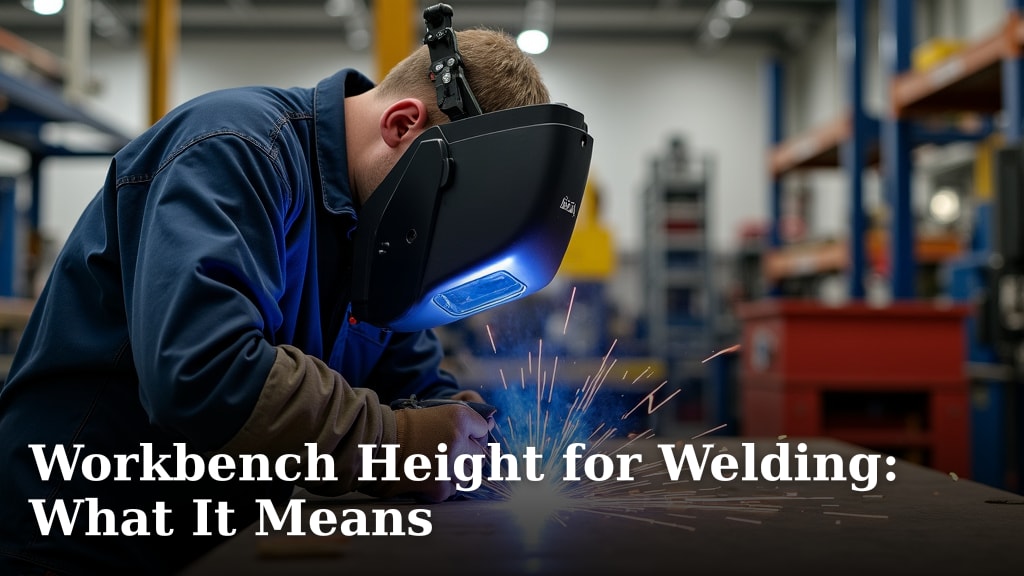
The ideal workbench height for welding is typically between 30 and 36 inches. This range allows most welders to work comfortably without excessive bending or reaching. Getting this height right means less strain on your back and more focus on your project.
Choosing the right height isn’t just about comfort; it’s also about safety and efficiency. A workbench that’s too high or too low can lead to poor welding posture and potentially dangerous mistakes. Many welders find that a standard height works best for general tasks, but customization is often key.
TL;DR:
- Standard welding workbench height: 30-36 inches.
- Proper height reduces back strain and improves focus.
- It impacts safety and welding quality.
- Consider your personal comfort and typical projects.
Let’s break down why that height range matters and how you can find the perfect workbench height for your specific needs. Consider if an outfeed table could enhance your workflow.
Finding Your Ideal Welding Workbench Height
The right workbench height is more than just a number. It’s about your comfort and safety. You want a height that lets you weld without hunching over or reaching too far. We found that a range between 30 and 36 inches works for most people.
Why Workbench Height Matters for Welders
Think of your welding bench like a comfortable chair. If it’s too low, you’ll slouch. If it’s too high, you’ll strain your shoulders. A good height supports your posture. This lets you focus on your weld beads, not your aching back.
Poor posture can lead to fatigue. It can also affect the quality of your welds. When you’re comfortable, you can hold your torch steady. This means cleaner lines and stronger joints. Many welders underestimate how much their workbench affects their work.
Standard Heights and What They Mean
Most standard workbenches are built for general use. They often fall into the 30 to 36-inch range. This is a good starting point for welding. It accommodates a wide variety of people. Even professional welders often find this range suitable.
A height of 30 inches is close to a standard dining table. A 36-inch height is closer to a kitchen counter. These are common heights we interact with daily. They offer a balanced approach for many tasks. For welding, this means you can position yourself easily.
The 30-Inch Sweet Spot
A 30-inch workbench height is excellent for welders who are shorter than average. It also works well if you prefer sitting while you weld. You can often fit a stool or chair comfortably underneath. This reduces standing fatigue during long projects. It’s a solid choice for hobbyists and those with limited space.
The 36-Inch Standard
A 36-inch workbench height is often considered the ideal for standing welders. It’s similar to a professional kitchen counter. This height allows most people to stand upright with their arms relaxed. It reduces the need to bend your back significantly. Many commercial welding shops use this height.
Factors to Consider for Your Perfect Height
No two welders are exactly alike. Your personal build is a primary factor. Things like your height and arm length play a big role. What feels right for one person might not for another.
Consider the type of welding you do most often. Are you building large structures or working on small, detailed pieces? Different tasks might benefit from slightly different heights. You might even find yourself needing more than one workbench.
Your Own Height and Stance
How tall are you? This is the most obvious question. If you’re on the shorter side, a 30-inch bench might be perfect. If you’re quite tall, you might even need something closer to 40 inches. We found that many people benefit from a slightly higher bench than they initially think.
Think about how you stand when you weld. Do you prefer a wide stance for stability? Or do you stand more upright? Your natural posture is key. Try to mimic your ideal welding stance when measuring potential workbench heights. Many experts suggest a height where your elbows are bent at about 90 degrees when your hands are on the workbench surface.
The Type of Welding Projects
Are you tackling big metal art pieces? Or perhaps you’re repairing car parts? Large projects might require a lower bench. This allows you to maneuver bigger items more easily. It also gives you more space to work underneath things.
Small, detailed work, like jewelry or scale models, might benefit from a slightly higher bench. This can help you get closer to the work. It can also improve your visibility of the weld puddle. Think about the scale of your typical projects.
Your Preferred Working Position
Do you primarily stand while you weld? Or do you prefer to sit? If you sit, the height of your stool or chair becomes important. You’ll want to ensure your elbows are at a comfortable angle when your hands are on the workbench. A standard office chair might be too low or too high for a welding bench.
If you stand, consider the strain on your legs and back. A height that allows you to stand relaxed is ideal. This reduces fatigue over long periods. Many sources suggest that standing height should allow for a slight bend in the knees.
Adjustable vs. Fixed Height Workbenches
For maximum flexibility, an adjustable height workbench is a great option. These allow you to fine-tune the height. You can change it based on the project or your mood. They are often more expensive. But the customization can be well worth it for serious welders.
Fixed height workbenches are simpler and often more affordable. If you know your ideal height, a sturdy fixed bench is a great choice. You can also build your own to specific dimensions. This is a popular option for DIYers and those on a budget.
Making the Right Choice for You
Finding the perfect welding workbench height is a personal journey. It involves a bit of trial and error. Don’t be afraid to experiment. Try different heights with mock-ups if you can.
Here’s a quick checklist to guide your decision:
- Measure your typical welding stance.
- Consider your overall height and arm length.
- Think about the size of your common projects.
- Decide if you prefer standing or sitting.
- Test different heights if possible.
- Remember that comfort equals better welds.
By carefully considering these points, you can set up a welding station that works for you, not against you. You’ll find yourself welding longer and with better results.
Conclusion
Finding your ideal welding workbench height is more than just a number; it’s about your personal comfort and welding success. We’ve seen that the 30-36 inch range is a great starting point. But remember, your own height, arm length, and the types of projects you tackle are the real deciding factors. Don’t be afraid to experiment a little. Your body will thank you, and your welds will show the difference. Now, go set up your welding station so it feels just right for you.
Frequently Asked Questions
Can I use a standard height desk for welding?
A standard desk might work for light hobby welding, but it’s not ideal for serious projects. Standard desks are often too low, leading to poor posture and back strain. They also might not be sturdy enough for the heat and vibrations of welding. You’ll likely find yourself uncomfortable and less productive.
What if I’m very tall or very short?
If you’re outside the average height range, the standard 30-36 inches might not work. Taller individuals may need a bench closer to 40 inches. Shorter individuals might prefer a bench around 30 inches or even lower if they plan to sit. It’s always best to measure your comfortable working height.
How does workbench height affect weld quality?
A workbench at the right height helps you maintain good posture and a steady hand. When you’re comfortable, you can focus better on your torch angle and speed. This leads to cleaner, stronger welds. Poor posture can cause fatigue, making it harder to control your welding equipment.
Should I choose an adjustable or fixed height workbench?
An adjustable workbench offers great flexibility, allowing you to change the height for different projects or if your needs change. A fixed height bench is often more affordable and very sturdy if you know your ideal height. For serious welders or those who work on diverse projects, an adjustable bench can be a wise investment.
How do I find my ideal welding stance for measuring height?
Stand naturally as you would when welding. Relax your shoulders and let your arms hang. You ideally want your elbows to be bent at roughly a 90-degree angle when your hands are positioned as if holding a welding torch over the workbench. This position minimizes strain and allows for control.