How to Choose a Folding Workbench on Wheels
Choose a folding workbench on wheels by checking its folded size, caster locks, stability and load capacity. Measure its storage spot and route, then match the work surface and rated load to the tasks you plan to do.
On this page (7 sections)
A folding workbench on wheels should fit your storage and travel route, stay put while you work, and support the tools and materials you plan to use. Check folded size, caster locks, stability and load capacity before comparing extra features.
The phrase “on wheels” can describe different setups. Some folding tables have casters; others fold down for carrying but need to be lifted or rolled with a separate cart.
Confirm how a specific model moves rather than assuming it has wheels.
For a wider look at portable options, see our best portable folding workbench guide. If you already have a folding table, the Worx Pegasus work table review and Keter folding workbench reviews cover two models discussed below.
How do you choose a folding workbench on wheels?
Start with where the bench will be stored and what you will do on it. These two details help you set practical limits for folded size, work surface, mobility and capacity.
| Check | What to measure or confirm | Why it matters |
|---|---|---|
| Storage | Folded width, depth and height; opening size | A bench needs to fit the actual storage space |
| Route | Doorways, turns, thresholds and floor changes | A bench that fits the room may not reach it |
| Mobility | Wheel type, locks and maker's setup directions | You need to know how it moves and stays in place |
| Work surface | Width, depth and working height | These shape how materials and tools fit |
| Capacity | Rated load for the intended setup | The rating must cover the tools and materials together |
Write down your largest planned task, such as supporting a sheet, holding a saw or assembling a project. Then list the heaviest tools and materials you expect to use at the same time.
For a fixed shop bench, see woodworking workbench plans.
This prevents a common mismatch: a bench may be easy to store but too small for the work, or its capacity may be lower than your combined load. Decide which limits matter most before comparing accessories.
What does “on wheels” mean for a folding workbench?
Check the exact mobility setup before buying. A folding table with casters can be moved while standing, while a portable folding table without wheels may need to be carried or placed on a separate dolly.
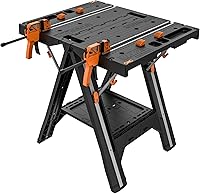
The WORX Portable Folding Workbench is described as a folding table and sawhorse with a fold-and-carry design. Its supplied product details identify its base type as casters, but do not specify caster locks.
Confirm the wheel design and locking method before relying on it for a task.
A stand such as the BORA Centipede folds into a carry bag, which is a different kind of portability. It can work for a job site or a storage area where you can carry the folded frame, but it should not be treated as a rolling bench.
How much folded space should you allow?
Measure the opening and the route, not only the empty floor area. Compare the bench's folded dimensions with the narrowest point along the way, including doorways, corners and any raised threshold.
Keep measurements in the same units as the dimensions you compare. Include handles, straps or a carry bag if they add bulk, and leave room to grasp the bench when removing it from storage.
The BORA Centipede 2x4 ft has folded item dimensions of 6 in deep, 38.5 in wide and 9 in high. Its carry bag is included, so consider how you will store and lift the packed frame.
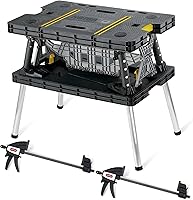
The Keter Heavy-Duty Folding Workbench measures 21.65 in deep, 33.46 in wide and 29.75 in high. Those are item dimensions, so check the maker's folding instructions and confirm the space it needs when stored.
The WORX table's stated dimensions are 25 in deep, 31 in wide and 32 in high. Those dimensions describe the table, so confirm the folded footprint separately before planning a storage slot.
For more ways to compare working and folded measurements, use our folding workbench dimensions guide. Measure your route with the bench's folded dimensions in hand, especially if you must pass through a narrow doorway or turn near a wall.
How do caster locks affect stability?
A wheel lock helps prevent movement, but it does not replace a stable setup. Check that the casters lock as intended, position the bench on a firm and level surface, and follow its setup directions before applying force.
If the workbench has no stated locking method, treat that as an unresolved buying detail. Ask the seller or maker before using it for tasks where rolling would create a hazard.
Clamping can also push or pull on a light table. Check that the bench supports the clamping method you plan to use, and avoid leaning or applying force beyond its intended setup.
For a bench that will carry heavy tools, compare purpose-built heavy duty workbench casters and retractable workbench casters. Those guides can help you understand caster options, but check compatibility with your specific workbench before changing its base.
What load capacity do you need?
Pick a workbench whose rated capacity covers the combined load of your tools, materials and anything else resting on it. Keep the intended setup in mind because a maker may give different capacities for workbench and sawhorse use.
For example, WORX gives the Pegasus a 300 lb capacity as a workbench and 1,000 lb as a sawhorse. Use the rating for the mode you have set up, not the larger number for a different mode.
Keter gives its folding workbench a 1,000 lb capacity. BORA gives the Centipede a maximum support capacity of 2,500 lb; the maker also notes that larger base sizes can hold more weight.
Confirm the selected model's rating for your planned setup.
These figures cannot be compared as if each table were being used the same way. Match the rating to the manufacturer's stated configuration, spread the load as directed and stay within the capacity.
Which folding tables suit common tasks?
Choose based on how you plan to use and move the workbench. These three options have different designs, so compare the relevant features rather than treating them as interchangeable wheeled tables.
For other shop setups, compare woodworking workbench designs.
BORA Centipede: a folding support stand
The BORA Centipede suits users who want a foldable support base with accessories for holding work materials. Its full kit includes 2 quick clamps, 4 X-shaped brackets for standard 2x4 boards and a carry bag.
Its working height is 30 in, and BORA says it can support up to 2,500 lb. Risers are available separately to increase working height, and the maker offers several sizes.
This is a carry-and-set-up option, not a wheeled bench. Choose it if its folding frame and included supports suit your work, and confirm the capacity for the exact size and setup you plan to use.
Keter Heavy-Duty Folding Workbench: a broad folding table
The Keter Heavy-Duty Folding Workbench suits buyers who want a folding work surface with a stated 1,000 lb capacity. It has two removable 12 in clamps that can be installed horizontally or vertically.
Compare portable workbenches with clamps if clamping is a priority.
Its listed materials include polypropylene, resin and aluminum legs. Keter describes the table as quick to open and fold, with no assembly required.
The product details do not specify caster locks, so confirm the mobility setup if wheels are important to you. Choose it for a foldable surface and included clamps when its size and capacity fit your work.
WORX Portable Folding Workbench: a table and sawhorse
The WORX Portable Folding Workbench suits projects that can benefit from a table that also works as a sawhorse. It includes two 24 in quick clamps, four clamp dogs and two table links.
WORX gives it a workbench capacity of 300 lb and a sawhorse capacity of 1,000 lb. The table measures 31 in by 25 in, and its working height is stated as 32 in.
Its folding design is made for compact storage and carrying, but the product details do not give a folded measurement or describe caster locks. Check those details directly if rolling storage is essential.
See our best heavy duty folding workbench guide for more options in this category.
When should you choose a mobile workbench with drawers?
Choose a mobile workbench with drawers if you need tools to travel with the work surface. A folding table is easier to collapse and store, while a drawer bench can keep small tools together between tasks.
Check the total footprint, drawer access and wheel locks before choosing a larger mobile bench. It needs enough room to move and enough clearance to open its drawers where you plan to use it.
Compare our best mobile workbench with drawers guide if tool storage is part of the job. If carrying tools separately works better, a folding table may be easier to fit into a tight storage area.
Which folding workbench should you choose?
Pick the bench by matching its movement and storage setup to the job. **Choose a carry-bag support stand for a foldable base, a clamped folding table for a ready-made work surface, or a two-mode table if sawhorse use matters.
If you want to build one, see these folding workbench plans.**
Before you buy, confirm the folded size, route, caster locks and capacity for the exact setup. If wheels and stability are your main concern, compare models made for that use and verify how each one locks before relying on it.
Frequently asked questions
What should I check when choosing a folding workbench on wheels?
Check folded dimensions, total weight, caster locks, working height, surface area and load capacity. Make sure the workbench fits through your route and into its storage spot, and confirm the maker's instructions explain how to secure it before work.
Match its capacity to the tools and materials you plan to support.
Do folding workbenches with wheels need locking casters?
Locking casters help keep a wheeled workbench from rolling during a task, but they do not guarantee a stable setup on every floor. Check how the locks engage, place the bench on a firm, level surface, and follow the maker's setup instructions before cutting, sanding or clamping.
How much weight should a folding workbench support?
Choose a rated capacity above the combined weight of the tools and materials you expect to use at one time. Check whether a maker gives separate capacities for workbench and sawhorse modes, since those ratings can differ.
Do not assume the same capacity applies to a different setup.
Can you add casters to a folding workbench?
Only add casters if the workbench maker approves that change and provides a suitable installation method. Added wheels can change the working height, folding action and stability.
If you need to move a bench often, a model designed for mobility may be easier to assess and set up.
How do I know whether a folding workbench will fit in storage?
Compare the folded dimensions with the full storage opening, then account for handles, a carry bag and the space needed to lift or slide it into place. Measure doorways and turns on the route as well.
A listed folded size does not account for obstacles around your storage area.