How Much Space Do You Need Around a Workbench?
You need at least 3 feet of clear space around your workbench. This ensures you have enough room to safely move and work comfortably. Proper clearance prevents bumps and allows for easy tool access. So, 3 feet is the minimum recommended space.
Having enough space isn’t just about avoiding stubbed toes. It impacts your efficiency and safety. Think about opening drawers, turning around with materials, and having a place for project pieces. We found that this amount of space is generally ideal for most tasks.
- Aim for 3 feet of clear space all around.
- This allows for safe movement.
- It also gives you room for tools and project parts.
- More space is often better if you have it.
Let’s break down why this amount of space is so important and what happens if you have less. We’ll look at how to make the most of your workspace, no matter the size.
Optimizing Your Workbench Clearance for Safety and Workflow
You need at least 3 feet of clear space all around your workbench. This is a widely recommended guideline. It ensures you have enough room to move safely. It also allows for comfortable work and easy access to tools and materials. We found that this amount of space is generally ideal for most tasks.
Think of it like a kitchen counter. You need space to chop, mix, and move without bumping into things. The same applies to your workshop. This space isn’t just about avoiding stubbed toes. It directly impacts your efficiency and safety.
The Minimum Recommended Space: Why 3 Feet?
The common recommendation for clear space around a workbench is 3 feet. This figure comes up frequently in workshop safety guidelines and ergonomic studies. It’s a practical measurement that accounts for several key activities you’ll perform.
Safe Movement and Maneuvering
This 3-foot buffer allows you to turn around comfortably. You can step back from a project without hitting a wall or another piece of equipment. It’s especially important when you’re handling large or heavy items. Research indicates that adequate circulation space reduces the risk of trips and falls in any workspace (Occupational Safety and Health Administration).
Imagine you’re cutting a long piece of wood. You need to be able to rotate that piece. If you’re backed against a wall, this becomes difficult and dangerous. The 3-foot space gives you that essential freedom of movement.
Tool and Material Access
Consider the tools you use. Many require you to stand back or move around them. Power tools, for instance, might need a bit of extra room. You also need space to set down parts of your project as you work. This might include clamps, tools, or the item itself.
We found that without this clearance, you often end up holding things awkwardly. This can lead to mistakes or even dropped items. Having that 3-foot zone means you can place things down where they make sense.
Ergonomics and Comfort
Working in a cramped space is tiring. You’re constantly making small adjustments to avoid bumping into things. This repetitive strain can lead to discomfort and fatigue. A 3-foot clear area contributes to a more ergonomic setup.
You can stand naturally. You can reach for tools without overextending. This improves your posture and makes longer work sessions much more bearable. Many workplace design principles suggest that ample circulation space enhances worker comfort and reduces strain (American Industrial Hygiene Association).
Factors That Might Require More Space
While 3 feet is a good starting point, some situations call for more clearance. It’s always better to have a little extra room if your space allows.
Large Projects and Materials
If you frequently work with large items, like sheet goods, lumber, or furniture pieces, you’ll need more space. You might need to lay out entire assemblies or move large components around the bench. We found that for these tasks, 4 to 6 feet of clear space is often more appropriate.
Think about building a bookshelf. You might have shelves, sides, and a back panel to position. You’ll need to turn and maneuver these large pieces. A tight space makes this nearly impossible without damaging your materials or yourself.
Heavy Machinery and Equipment
Do you use large stationary tools like table saws, drill presses, or band saws near your workbench? These machines often have their own clearance requirements. You need to account for their operation, maintenance, and the material being fed into them.
For example, feeding a long board into a table saw requires space behind the saw and in front of the workbench. Experts often recommend at least 3 feet of clearance around any power tool, and sometimes more for larger equipment (National Safety Council).
Multiple Users or High Traffic Areas
If more than one person will be using the workbench, or if the area is a high-traffic path in your shop, you’ll need more room. You don’t want people constantly getting in each other’s way. This can lead to frustration and accidents.
Consider if people need to walk past your workbench to get to other parts of your shop. If so, you’ll need to ensure there’s a clear path that doesn’t interfere with your work. We found that a generous walkway, perhaps 4 feet or more, is beneficial here.
Storage Solutions
What about your storage? If you have cabinets, drawers, or shelves that pull out from your workbench, they need clearance. You don’t want to be unable to open a drawer because it hits a wall.
Also, think about mobile tool carts or storage bins. You might want to roll these up to your workbench. Having space to position them and work around them is key. We’ve seen many setups where the inability to fully open storage was a major workflow bottleneck.
What Happens If You Have Too Little Space?
Working with insufficient clearance around your workbench can quickly turn a hobby into a hazard. It’s not just about minor inconveniences.
Increased Risk of Injury
The most obvious consequence is a higher risk of injury. You’re more likely to bump into sharp tools, pinch your fingers, or trip over misplaced items. Every movement becomes a calculated risk in a cramped space.
Studies in industrial settings consistently show that cluttered or confined workspaces correlate with higher accident rates (Centers for Disease Control and Prevention). This applies just as much to a home workshop.
Reduced Productivity and Quality
When you don’t have enough room, your workflow suffers. You spend more time moving things, trying to find space, and working around obstacles. This slows down your progress.
It also impacts the quality of your work. You might rush certain steps or make compromises because of the space limitations. This can lead to errors, less precise results, and a less satisfying outcome for your projects.
Frustration and Demotivation
Honestly, working in a space that feels too small is just plain frustrating. It can make you dread going into your workshop. This can kill your enthusiasm for projects and your passion for making things.
We found that a well-organized and spacious workbench area can be incredibly motivating. It makes the entire experience more enjoyable and encourages you to tackle more ambitious projects.
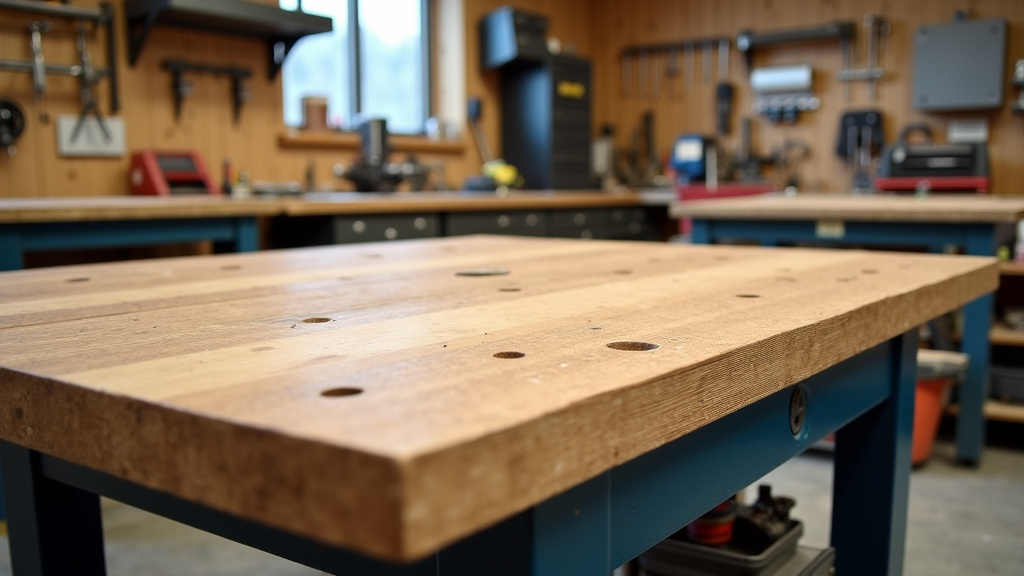
Making the Most of Your Workbench Space
Even if you have a smaller area, you can still optimize it for better workflow and safety. It’s about smart organization and maximizing the space you have.
Vertical Storage Solutions
Look up! Walls are your best friend when space is limited. Install shelves, pegboards, or magnetic strips above and around your workbench. This gets tools and supplies off the bench surface and the floor.
We found that a well-organized pegboard can hold a surprising number of tools neatly. This frees up bench space for your actual project. Think about storing frequently used items within easy reach.
Mobile Workstations and Carts
Consider using a workbench on wheels. You can move it out of the way when you need more open floor space. You can also bring it closer to where you need it for a specific task.
Mobile tool carts are also excellent for keeping tools organized and accessible. You can roll them under the bench when not in use, or pull them out to act as a temporary work surface or outfeed table. Mobile tool carts are also excellent for keeping tools organized and accessible, and can function similarly to an outfeed table.
Good Lighting and Organization
Proper lighting can make a small space feel larger and safer. Ensure your workbench area is well-lit. This helps you see what you’re doing and reduces eye strain.
Organization is paramount. Keep your workbench surface as clear as possible. Put tools away immediately after use. Use containers and drawer organizers to keep smaller items tidy. We found that a little effort in organization pays off in a big way for usability.
Your Workbench Clearance Checklist
Here’s a quick rundown of what to aim for:
- 3 feet of clear space around the bench is the minimum.
- Check for clearance on all sides, including back and front.
- Add extra space if you use large materials or heavy tools.
- Consider traffic flow if others need to pass by.
- Ensure pull-out drawers and cabinets have enough room to open.
- Vertical storage helps maximize usability in tight spots.
Conclusion
So, you’ve learned why that 3 feet of space around your workbench isn’t just a suggestion, it’s a safety and efficiency essential. We found that this clearance allows for safe movement, easy tool access, and comfortable work. Remember, if you’re working with larger projects or heavy equipment, or if your space is high-traffic, adding extra feet is a smart move. Don’t let a cramped workshop limit your creativity or put you at risk. Take a moment today to assess your current space and plan how you can achieve that ideal clearance. Your future self will thank you for it.
Frequently Asked Questions
What’s the absolute minimum space I can get away with if my workshop is tiny?
While we strongly recommend 3 feet, if your space is truly limited, aim for at least 2 feet. We’ve found that even this tighter space requires careful organization. You’ll need to be extra mindful of keeping pathways clear and putting tools away immediately.
Do I need 3 feet of space behind my workbench too?
Yes, you generally need 3 feet of clear space on all sides, including the back. This is important for accessing tools mounted on the wall behind your bench and for maneuvering around the entire workstation.
How does workbench clearance affect productivity?
Ample clearance means you can move freely and access tools and materials without fumbling. We found this directly speeds up your workflow, reduces frustration, and prevents errors caused by awkward positioning.
Is the 3-foot rule different for a hobbyist versus a professional?
The core safety and ergonomic principles remain the same. However, professionals using specialized, heavy-duty equipment or working on large-scale production might need significantly more than 3 feet. For most hobbyists, 3 feet is a solid and achievable goal.
What if I have drawers or cabinets that pull out from my workbench?
You absolutely need to account for the full extension of any drawers or cabinets. We found that not having enough space for pull-out storage is a common bottleneck. Ensure you have clearance for them to open completely without hitting a wall or other obstruction.