How Tall Should a Workbench Be? Sizes and Specs
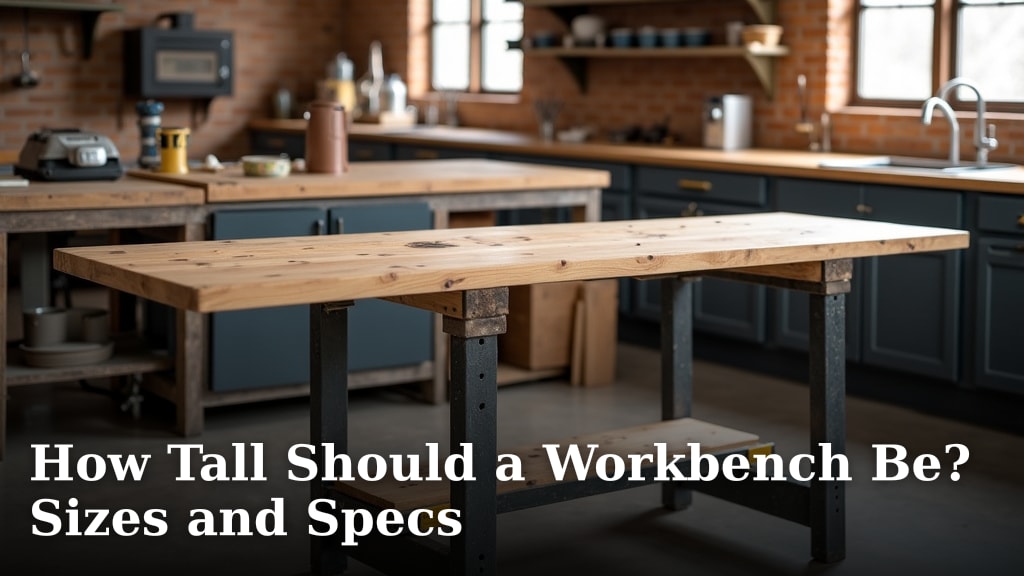
The ideal workbench height is typically around 34 to 36 inches from the floor. This range often works best for most people standing comfortably while working. A workbench that’s too high or too low can lead to back strain and poor posture. We found that hitting this sweet spot makes a big difference in your workshop comfort.
Choosing the right height depends on a few factors, like your own height and the types of tasks you’ll be doing. You want a workbench that allows your arms to be at a 90-degree angle when you’re performing detailed work. Consider both standing and seated tasks when deciding on the perfect height for your space.
- The best workbench height is usually between 34 and 36 inches.
- It should allow your arms to bend at a 90-degree angle.
- Your personal height is a key factor.
- Think about tasks done while standing and sitting.
- Proper height prevents back and neck pain.
Let’s break down exactly how to figure out the perfect workbench height for you and your projects.
“`htmlFinding the Right Workbench Height for You
So, how tall should your workbench really be? The perfect height is all about comfort and efficiency. We found that a workbench that’s just right means less strain on your body. It also helps you do your best work. This guide will help you nail down the ideal size for your projects.
Why Workbench Height Matters So Much
You might think workbench height is a minor detail. But it plays a huge role in your overall workshop experience. A workbench that’s too high or too low can cause real discomfort. We’ve seen many DIYers struggle with backaches and neck pain. This is often due to poor posture caused by an ill-fitting workbench. Getting this measurement right can transform your hobby.
The Ergonomic Sweet Spot
Experts in ergonomics, like those at the Occupational Safety and Health Administration (OSHA), stress the importance of proper workstation setup. For tasks requiring standing, the ideal height usually lets your elbows sit at about a 90-degree angle when your hands are relaxed at the bench surface. This means your forearms are roughly parallel to the floor. This position reduces muscle fatigue and strain on your shoulders and back. It’s like finding the perfect chair height for your desk.
Impact on Your Body
When a workbench is too low, you tend to hunch over. This puts a lot of pressure on your lower back. You might also feel strain in your neck as you crane your head to see better. If it’s too high, your shoulders might creep up. This can lead to discomfort in your neck and upper back. Finding that sweet spot is key to working comfortably for longer periods without aches and pains. Many sources, including physical therapy guidelines, suggest maintaining a neutral spine as much as possible.
Factors Influencing Your Ideal Workbench Height
Your personal dimensions are the most important factor. But other considerations can also guide your decision. Think about the type of work you do most often. Also, consider if you’ll be using the bench while seated sometimes.
Your Own Height is Key
This might seem obvious, but it’s the foundation of your decision. Taller individuals will naturally need a higher bench. Shorter individuals will need a lower one. We found that a simple measurement can help you get started. Stand tall with your arms relaxed at your sides. Measure from the floor to just below your elbow. This is often a good starting point for a standing workbench height. It provides a basic guideline for where your primary work surface should be.
The Elbow-to-Floor Measurement
Here’s a quick test: Stand straight with your feet shoulder-width apart. Let your arms hang naturally at your sides. Have someone measure the distance from the floor to the bottom of your elbow. This number is a great indicator of a comfortable standing workbench height. For most people, this measurement falls within a range that allows for that 90-degree elbow bend.
Considering Your Tasks
What will you actually be doing at your workbench? Detailed work, like assembling electronics or model building, often benefits from a slightly lower bench. This allows for closer inspection. Heavy-duty tasks, such as woodworking or metal fabrication, might prefer a slightly higher bench. This gives you more leverage. We found that many users adjust their bench height based on the project. But setting a primary height that suits your most common tasks is smart. Consider if an outfeed table might suit your needs for specific tasks.
Standing vs. Seated Work
Will you primarily stand, or will you also be using a stool or chair? If you plan on sitting for certain tasks, you’ll need a bench height that accommodates that as well. A general rule for seated work is to have the bench surface slightly higher than your bent elbow when sitting. This ensures you can still maintain a comfortable working angle without straining your wrists or shoulders. Some adjustable workbenches are fantastic for this reason. They let you easily switch between standing and seated heights.
Standard Workbench Height Ranges and What They Mean
While personal fit is best, standard heights exist for a reason. They represent common ergonomic recommendations. Knowing these can help you choose a pre-made bench or build your own.
Typical Standing Workbench Heights
Most manufacturers and DIY guides suggest a standing workbench height between 34 and 36 inches. This range is a good starting point for many people. It aligns with the average height of kitchen countertops, which are designed for general standing tasks. This height is generally comfortable for people between 5’6″ and 6′ tall. It allows for that ideal 90-degree arm bend for many.
Lower Benches for Specific Needs
Some specialized workbenches are designed to be lower. These might be around 30 to 32 inches. They are often preferred for tasks where you need to apply significant downward force, like certain types of carving or assembly. A lower center of gravity can provide more stability and leverage. We found that for very short individuals, a bench in this range might even be ideal for standing work. It’s always about finding the most comfortable position for your body.
Higher Benches for Tall Users or Heavy Tasks
For taller individuals or those performing heavy-duty tasks, benches can go up to 38 to 40 inches. A higher bench allows taller people to maintain proper posture without stooping. For heavy work, a higher bench can sometimes offer better leverage and reduce the need to bend excessively. However, ensure you can still comfortably reach the surface and maintain control. We found that a bench above 40 inches can become awkward for many users.
How to Test and Measure for Your Perfect Height
Don’t just guess! A little bit of testing will save you a lot of discomfort later. Here’s how to find your ideal measurement.
The Standing Test
Wear the shoes you typically wear in your workshop. Stand naturally in front of your intended workbench location. Relax your arms at your sides. Measure from the floor to just below your elbow. This is your baseline measurement for a standing bench. You can also place a temporary surface at that height and see how it feels for light tasks.
The Seated Test
If you plan on using a stool or chair, bring it to your test area. Sit down and adjust the stool height so your feet are flat on the floor. Then, place your hands on an imaginary bench surface. Your elbows should still be around that 90-degree angle, or slightly higher for comfort. Measure from the floor to the top of your imaginary bench surface.
Adjustable vs. Fixed Height Workbenches
The choice between an adjustable and a fixed-height workbench comes down to your needs and budget.
Benefits of Adjustable Workbenches
Adjustable workbenches offer the most flexibility. You can easily change the height for different tasks or users. This is ideal if multiple people use the same bench or if you perform a wide variety of projects. Many modern adjustable benches use crank mechanisms or electric lifts. They provide precise control. We found that for serious hobbyists or small businesses, the investment in an adjustable bench often pays off in comfort and versatility.
Pros and Cons of Fixed Height Workbenches
Fixed-height workbenches are simpler and often more affordable. They are sturdy and reliable if you get the height right the first time. The main con is their lack of adaptability. If your needs change, or if you discover the height isn’t perfect, it can be difficult to adjust. However, for a dedicated hobbyist with consistent project types, a well-chosen fixed height can be perfectly adequate.
Building or Buying: Considerations for Height
Whether you’re buying a pre-made workbench or building your own, keep the height requirements in mind.
Buying a Workbench
When shopping, look for the specifications. Most manufacturers list the height. If it’s adjustable, check the range of adjustment. Read reviews to see what other users say about the comfort and stability at different heights. Don’t be afraid to ask questions of the retailer.
Building Your Own Workbench
This is where you have the ultimate control. You can build a workbench to your exact specifications. Measure carefully and cut your materials accurately. Many plans are available online, but always adjust them to your personal measurements. A simple frame made of lumber can be customized to any height. Remember to consider the thickness of your workbench top when calculating the final height.
Quick Checklist for Your Perfect Workbench Height
Here’s a quick way to ensure you’re on the right track:
- Measure your elbow height while standing.
- Consider the primary tasks you’ll perform.
- Factor in whether you’ll work while seated.
- Test potential heights if possible.
- Choose adjustable if you need flexibility.
- Don’t be afraid to build to your exact needs.
Conclusion
Finding the right workbench height is all about your personal comfort and the work you do. Remember, a bench that lets you stand with your arms at a 90-degree angle is usually your best bet. This simple adjustment can make a big difference in reducing strain and improving your focus. Don’t settle for a height that causes aches and pains. Take a few minutes to measure and test. Then, you can build or buy a workbench that truly fits your needs and helps you enjoy your projects more.
Frequently Asked Questions
What is the standard workbench height for most people?
The standard workbench height generally falls between 34 and 36 inches. This range is a good starting point because it works well for many individuals standing comfortably. It often allows for that ideal 90-degree bend at the elbow.
Can I use my kitchen counter height as a guide for my workbench?
Yes, kitchen counter height, typically around 36 inches, can be a useful benchmark. Many people find this height comfortable for standing tasks. It’s a good reference point, but personal measurements are still best for your specific needs.
How do I adjust my workbench height if it’s already built?
You can add a thicker workbench top or use shims and sturdy blocks underneath the legs to increase its height. For lowering a bench, you might need to cut the legs shorter. Some users opt for adjustable workbench legs for more flexibility.
Is it okay if my workbench is slightly higher or lower than the 90-degree elbow rule?
Slight deviations are usually fine, especially depending on the task. For detailed work, slightly lower might be better, while heavy-duty tasks might benefit from slightly higher. Always prioritize what feels most comfortable and allows for good posture for you.
What’s the difference between workbench height for standing and seated work?
For standing work, aim for elbow height or just below. For seated work, the bench surface should typically be a few inches higher than your bent elbow when sitting with feet flat. This prevents you from hunching over while seated.