How Deep Should a Workbench Be for Sports Equipment Repairs?
For sports equipment repairs, start with a workbench about 24 in deep if you need room for tools and medium-sized gear. Choose 30 in or more for bulky equipment, and check the full item’s footprint before you settle on a bench.
On this page (7 sections)
- How deep should a workbench be for working on sports equipment?
- How do you measure sports equipment for bench depth?
- Does a deeper workbench always work better?
- Which bench features can help with sports repairs?
- How should you choose a bench for a small garage?
- What should you check before setting up the bench?
- Which workbench depth should you choose?
For sports equipment repairs, start with a workbench about 24 in deep if you need room for tools and medium-sized gear. Choose 30 in or more for bulky equipment, and check the full item’s footprint before you settle on a bench.
The right depth depends on the gear you work on, how you position it, and whether tools or parts need to stay on the surface. A bench that is too shallow can leave an item hanging over the edge; one that is too deep may make it harder to reach the back.
Measure the equipment in the position you plan to repair it. Then leave room for your hands, tools and small parts.
Our guide to Standard Workbench Dimensions: A Short Guide covers how depth fits with bench width and height.
How deep should a workbench be for working on sports equipment?
A depth of about 24 in is a practical starting point for many sports equipment repairs. Consider 30 in or more when the item is wide or bulky, or when you need to lay out several tools beside it.
These are planning ranges, not fixed rules. A bike wheel, a pair of skates and a large piece of protective gear have different shapes, and their working footprints can change when you turn or secure them.
| Repair setup | Starting depth to consider | Check before choosing |
|---|---|---|
| Small parts, skates or protective gear | 18–24 in | Room for hands and parts trays |
| Medium gear and repair tools | About 24 in | Whether the equipment fits flat or needs turning |
| Bulky gear or a wide work area | 30 in or more | Reach to the back and available floor space |
Depth alone does not determine whether a work surface will work. Bench width, edge access, clamps, a vise and storage can all affect how much usable space remains.
For a closer look at general sizing, see How Deep Should a Workbench Be? A Plain Guide.
If you already know you need a broad surface, compare options in our best large garage workbench guide.
How do you measure sports equipment for bench depth?
Measure the equipment in its actual repair position, including any parts that extend beyond its main body. Then add space for the tools and parts you want to keep beside it.
Use a tape measure to check the front-to-back dimension of the item as it will sit on the bench. If you will rotate it during repair, measure the largest footprint it makes in the positions you expect to use.
For example, a long item may fit when aligned with the bench but need more depth when turned sideways. A wheel or curved frame can also extend past the edge even if the main body seems to fit.
Make a simple floor or cardboard outline of the measured footprint. Add the space you need for your hands, a clamp or support, and a small parts tray.
This gives you a more realistic estimate than measuring the equipment alone.
Do not count overhang as usable support. Some overhang may be workable for a light task, but a heavy or awkward item can shift if too much of it sits beyond the bench.
Keep the main weight supported and secure the item in a stable position.
How much extra depth do tools and parts need?
Leave enough clear surface for the tools you use during the repair, without crowding the gear. The extra space varies with the job, so lay out your usual tools before choosing a depth.
A repair may call for a hand tool, fasteners, a cleaning cloth and a tray for small parts. If those items share the bench with the equipment, measure their footprint too.
Try this setup:
- Place the equipment outline on a flat surface.
- Set the tools and parts containers where you expect to use them.
- Measure the full front-to-back area.
- Add a little room to reposition your hands or move a tool.
- Check that the proposed bench depth fits your shop.
If you prefer to keep tools off the main top, a pegboard, shelf or drawer can help free up work space. Storage should still leave frequently used items easy to reach without putting them where they can fall onto the equipment.
Does a deeper workbench always work better?
No. A deeper bench gives you more surface, but the back edge can become difficult to reach.
Choose enough depth for the repair, then make sure you can work across the whole top without leaning over awkwardly.
A deep surface can suit large gear or a repair that needs several items laid out at once. It can also push the main work area farther from you, especially when a wall or backsplash keeps you from walking around the bench.
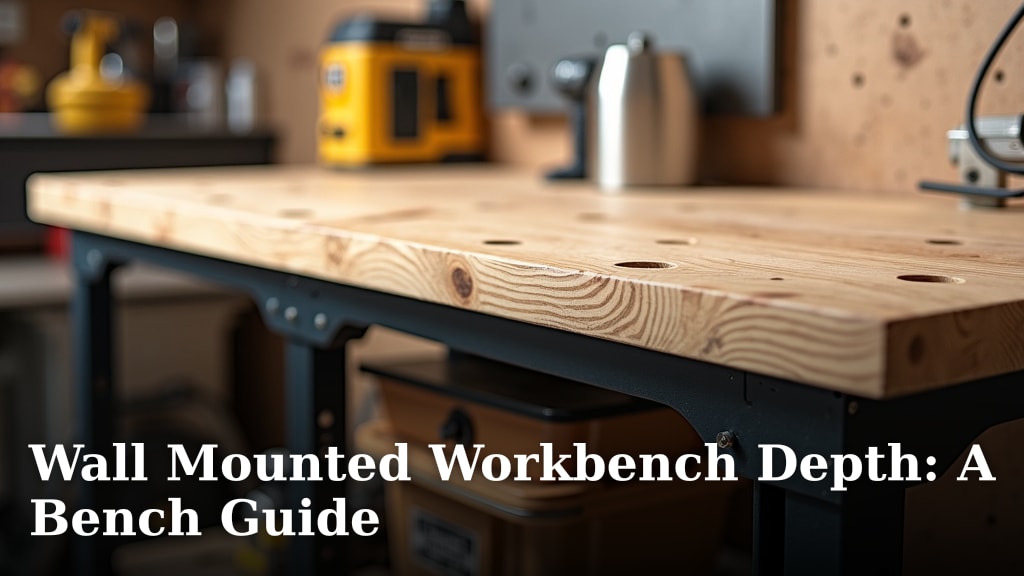
For a wall-side bench, check how much of the top you can reach from the front. Our Wall Mounted Workbench Depth: A Bench Guide explains why wall placement changes the useful depth.
If a work surface will sit in a garage, mark the bench’s footprint on the floor and check nearby doors, vehicles and storage. A deeper bench can narrow a walkway or interfere with items you need to move through the space.
If you are considering a corner setup, compare corner workbenches for garages for ways to fit the bench into the layout.
Use the deepest surface that you can reach and fit comfortably. If your work requires a large footprint only now and then, a movable or separate support may be more practical than dedicating extra depth to every task.
What if the equipment is too large for one bench?
Use a larger work surface or add stable support when the equipment cannot sit securely on a standard bench. Measure the full working footprint before you decide whether one bench can handle the job.
A longer bench may help when equipment extends along its length, while extra depth helps when it spreads front to back. If you are comparing wide garage setups, see our garage workbench ideas for ways to plan the surrounding space.
A separate support can hold an end that would otherwise hang unsupported, but it needs to be steady and level with the bench. Check that the equipment cannot roll, tip or slide while you work.
Avoid placing a heavy object on a small top just because its center fits. Its edges, weight and movement during repair matter too.
The bench and any added supports should remain stable through the task.
Which bench features can help with sports repairs?
A clear, stable top is the main requirement; storage and adjustable height can help with the rest of the setup. Match those features to your repair routine and confirm the bench dimensions suit the gear.
These three options have different depths and layouts. Compare the surface size with your measured work area, then decide whether height adjustment, pegboard or drawers will make the repair easier to organize.
VEVOR Adjustable Workbench: 20 in deep
The VEVOR has a 61 x 20 in surface, which gives you a long work area but less front-to-back room than a 24 in or 30 in top. It may fit smaller gear or a setup where tools can stay on a separate shelf.
The bench has 11 height levels, four AC outlets, two USB ports and a 9.8 ft power cord. Its hardwood top is 1 in thick, and VEVOR gives its load capacity as 2,000 lb.
Check the 20 in depth against your full repair layout. If your equipment needs more space front to back, you may prefer a deeper surface.
Topass Workbench with Pegboard: 18 in deep
The Topass bench measures 34 in wide by 18 in deep and includes a pegboard and adjustable shelving. Its narrow top can suit a compact area or a repair setup where gear and tools do not need to sit side by side.
It has four lockable wheels, so you can roll it between work areas and lock it in place. The listed capacity is 200 lb across its shelves, with 100 lb per shelf.
Measure the equipment carefully before choosing this depth. The 18 in top may be too shallow for bulky sports gear or a large parts layout.
MUWOOD 60" Workbench with Drawers: 22 in deep
The MUWOOD bench has a 60 x 22 in rubberwood top, drawers and a pegboard. Its depth sits between the 18 in Topass and 20 in VEVOR?
Actually 22 in depth is 2 in deeper than the VEVOR and 4 in deeper than the Topass, while the 60 in width gives you room to arrange tools alongside smaller equipment.
The height adjusts through six levels from 28 to 40 in. It also has four AC outlets, two USB ports and a strip light.
Compare the 22 in depth with your measured footprint. It may suit a medium repair setup, but measure bulky items before assuming they will sit fully supported.
How should you choose a bench for a small garage?
Choose a depth that supports your repair and leaves a usable path through the garage. A compact bench can preserve floor space, but it should not force gear to hang off the edge.
Tape the proposed depth and width on the floor. Add room in front for your stance and movement, then check whether the outline blocks a door, cabinet, parked vehicle or storage bin.
Think about where you will put the gear between repairs. A bench that works for a single task may not suit a garage that also needs to store bikes, balls or seasonal equipment.
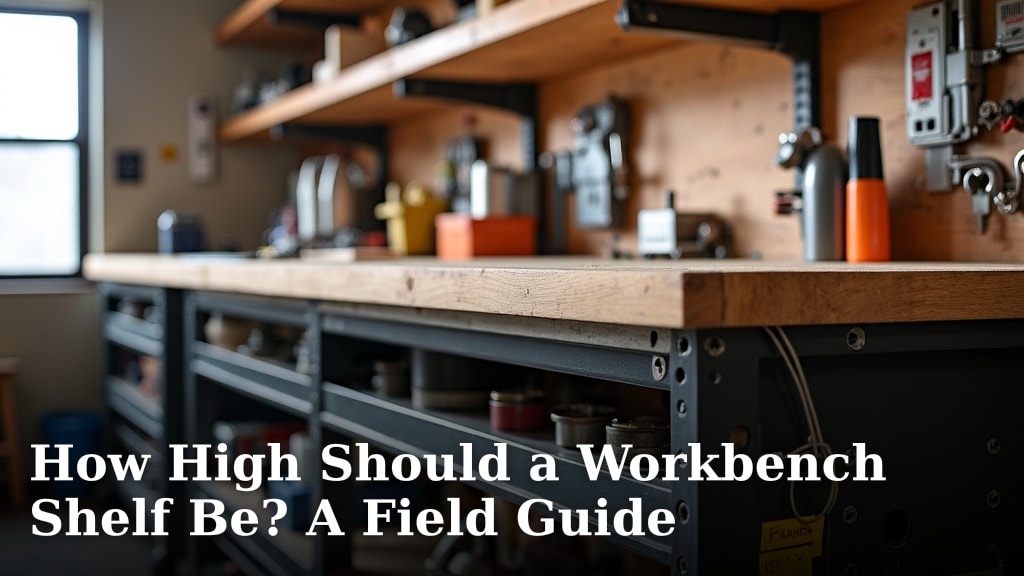
If your tools and gear need dedicated storage, compare the layout with best garage workbench and cabinets. For a shelf above the bench, see [How High Should a Workbench Shelf Be?
A Field Guide](/how-high-should-a-workbench-shelf-be/).
A bench that fits the room may still feel awkward if its height is wrong. Our guide to [How Tall Should a Workbench Be?
Sizes and Specs](/how-tall-should-a-workbench-be/) covers height planning.
What should you check before setting up the bench?
Check the bench footprint, working reach and item support before starting a repair. A few measurements can help you avoid a crowded surface and an unstable setup.
- Bench depth: Compare the actual top depth with your equipment outline.
- Bench width: Check whether the item and tools fit beside each other.
- Reach: Make sure you can reach the back of the work area comfortably.
- Support: Keep heavy or awkward equipment stable and supported.
- Clearance: Leave enough room for doors, walkways and nearby storage.
- Organization: Decide whether tools belong on the top, in drawers or on a pegboard.
Adjust the layout if a tool handle, vise or tray takes up more room than expected. Recheck the setup after you secure the equipment, since clamps and supports can use part of the surface.
Which workbench depth should you choose?
Choose about 24 in for a flexible sports repair surface, then size up if your measured gear needs more support. For small parts and compact equipment, 18–20 in may be enough; for bulky gear, consider 30 in or more if you can still reach the back.
Pick a shallower bench if space is tight and your work fits its top. Choose a wider or deeper setup when the item, tools and supports need to share the surface.
Measure first, and let the largest repair you expect to do set the minimum footprint.