How to Plan a Garage Workbench Setup
Plan your garage workbench around the jobs you do, the tools you reach for, and the space your car or other stored items need. Choose a fixed bench for a regular work area or a folding surface when you need to reclaim floor space.
On this page (10 sections)
- What should garage workbench ideas solve first?
- Where should you place a workbench in a garage?
- Should you choose a fixed or portable bench?
- How deep should a garage workbench be?
- How can you arrange tools and storage?
- How high should shelves sit above the bench?
- How do you plan lighting around a workbench?
- Which products fit common garage workbench setups?
- How can you test your garage workbench layout before building?
- Which garage workbench setup should you choose?
Plan your garage workbench around the jobs you do, the tools you reach for, and the space your car or other stored items need. A fixed bench can anchor a regular work area, while a portable or folding surface lets you reclaim floor space between projects.
Start with a floor plan, not a shopping list. Mark the garage doors, vehicle footprint, storage, outlets, and places where long materials need to pass.
What should garage workbench ideas solve first?
A useful garage workbench setup gives you task space, reachable tools, and a clear path through the garage. Decide which jobs happen at the bench before choosing its size or storage.
List your common tasks, such as repairs, assembly, painting, or woodworking. Note the tools and materials each one needs, then sort them into items you use every week and items you use only now and then.
Keep room for the task itself. A small repair may need only a clear bench top, while cutting or assembling longer pieces may call for open space beside or in front of the bench.
If a car parks in the garage, mark its doors and walking space too. A bench that fits against a wall can still make the garage awkward if it blocks a car door, cabinet, or route to an exit.
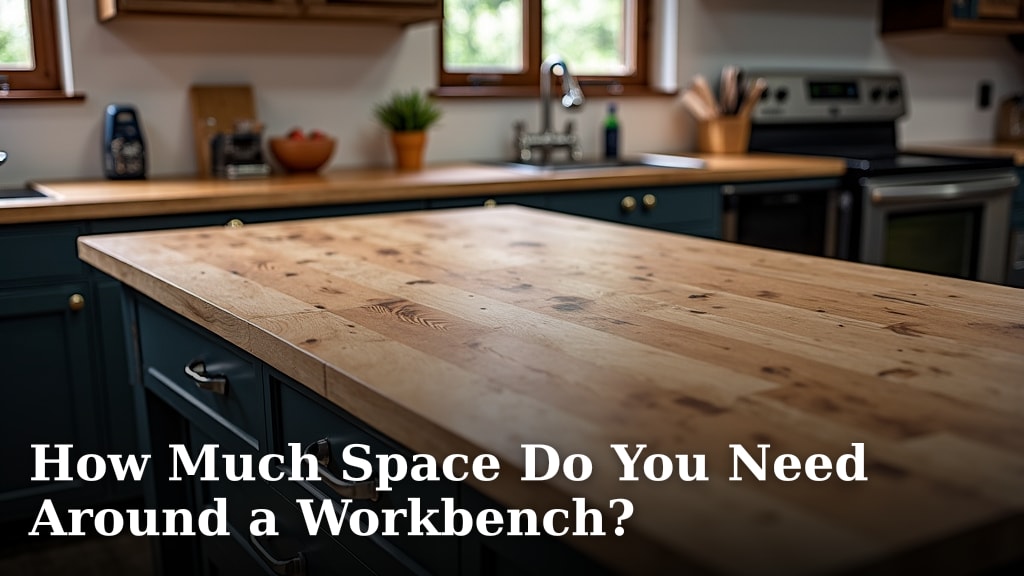
For more layout ideas, start with How Much Space Do You Need Around a Workbench?. Measure the area you can actually use before settling on a bench footprint.
Where should you place a workbench in a garage?
Place the bench where it supports your regular tasks without blocking doors, parking, or storage. A wall can make a fixed bench easier to arrange, but the best position depends on how you use the rest of the garage.
A corner workbench for a garage may help use an otherwise awkward wall junction.
Check the full swing of the garage door, house door, cabinets, and vehicle doors. Include the space needed to carry materials in and move finished work out.
Think about light and power before you commit to a location. A spot near an outlet may simplify tool use, while a poorly lit corner may need a lamp or overhead lighting.
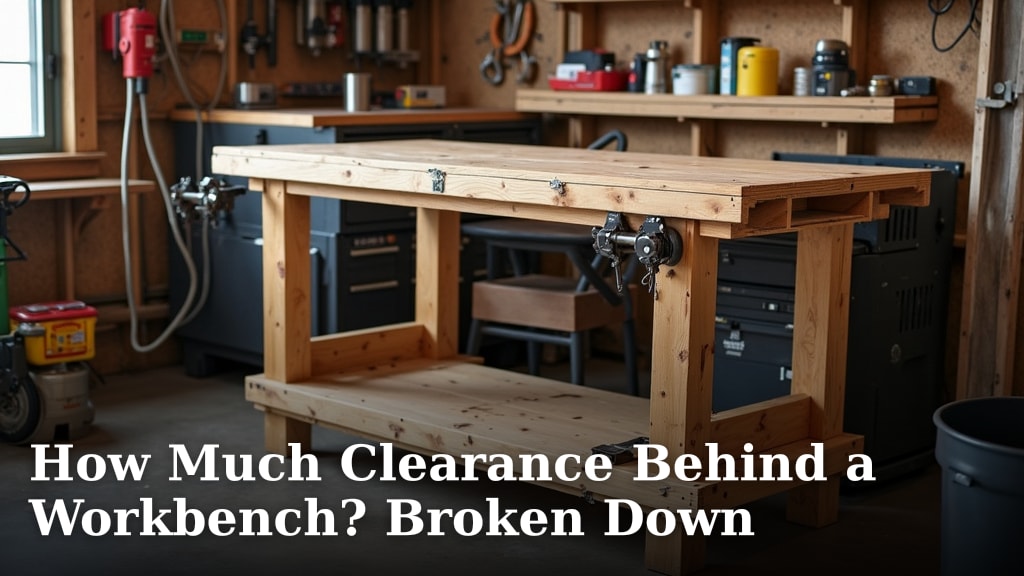
Leave a safe, open work area around the bench. If the bench sits near a vehicle or shelving, account for the space needed to use tools and move bulky items; see [How Much Clearance Behind a Workbench?
Broken Down](/how-much-clearance-behind-a-workbench/) for help planning that zone.
Should you choose a fixed or portable bench?
Choose a fixed bench for a regular work area and a portable one when you need to clear the floor between jobs. Your schedule and available space matter as much as the type of project.
A fixed bench makes sense when you work in the same place and want nearby storage. A custom build can use lumber sized for the wall and the tools you plan to keep there.
The Simpson Strong-Tie WBSK is a fit for a DIY layout where standard 2x4 lumber can be cut to suit your space. Lumber and fasteners for attaching plywood and pegboard are separate, so plan those materials too.
A portable bench suits garages that need to switch between projects and other uses. The WORX table folds for storage and can also serve as a sawhorse; its workbench surface measures 31 by 25 inches.
Choose a portable setup if you want to store the work surface after a job. Consider whether you will need a separate place for tools, since a folding table alone doesn't provide built-in tool storage.
How deep should a garage workbench be?
Choose a bench depth that fits your tasks while leaving enough room to move through the garage. A deeper top gives you more room for parts and tools, but it also takes more floor space.
Measure the wall, the vehicle clearance, and the space behind anyone working at the bench. Include room for materials that stick out beyond the top, such as boards or pipes.
A shallow bench can suit small repairs and light assembly. Larger projects may need a deeper surface or a nearby folding table that you can set up only when needed.
Compare common dimensions and tradeoffs in Garage Workbench Depth: The Practical Answer. If the garage is tight, Workbench Size for a Small Garage: Facts and Tips can help you narrow the footprint.
How can you arrange tools and storage?
Keep often-used tools close, heavier items low, and the main work surface clear. Arrange storage by task so you can find what you need without shifting unrelated gear.
Use drawers or a tool chest for small items that should stay together. A small workbench with drawers can keep frequently used items close in a compact setup.
Wall storage can keep frequently used tools visible, while shelves can hold supplies and items you don't reach for every day.
The WBSK kit can support a bench-and-shelf plan when you want the dimensions to fit a wall or a storage zone. Its instructions and cut list help organize the build, but you still need to choose lumber and plan where each shelf belongs.
Leave room to open drawers and cabinet doors fully. Check that stored items won't fall into the work area, and keep heavy objects low enough to lift without reaching overhead.
If you use a tool chest, tool chest organization ideas can help you group hand tools and supplies. Set the chest where it won't block your main work zone.
How high should shelves sit above the bench?
Set shelves high enough to leave room for your work, while keeping everyday supplies within comfortable reach. The right height depends on what you do at the bench and what you plan to store.
Place a shelf too low and it can crowd tall projects or make the work surface feel cramped. Put it too high and the items you use most may be harder to reach.
Test the arrangement before drilling. Hold a sample item in the space above the bench, then check your reach while standing where you expect to work.
For shelf placement details, see How High Should a Workbench Shelf Be? A Field Guide.
Measure both the shelf depth and the clearance below it.
How do you plan lighting around a workbench?
Make sure the work surface is bright enough to see small parts, measurements, and cut lines clearly. Check for shadows from shelves, cabinets, and your own body before deciding where to add task lighting.
A ceiling light may brighten the garage but still leave the bench in shadow. Position task lighting so your hands and tools don't block the light where you need it most.
If the bench is near an outlet, plan cord routes so they don't cross a walkway or snag on stored items. Keep lights and cords away from places where materials or tools might knock them loose.
Use garage lighting ideas to compare ways to light the bench and the surrounding space. Recheck your layout after adding shelves, since storage can change how light reaches the work surface.
Which products fit common garage workbench setups?
Match a product to the problem you need to solve: custom sizing, movable workspace, or a ready-made adjustable bench. These options suit different garage layouts, so compare them with your measurements and work habits.
Choose the Simpson Strong-Tie WBSK if you want to build a custom bench and storage from lumber. It includes connectors, screws, a cut list, and instructions.
Choose the WORX Portable Folding Workbench if you need a work surface that can fold away or move between tasks. It includes two quick clamps and four clamp dogs.
The WORKPRO 48" Adjustable Workbench suits a dedicated spot where an adjustable-height bench and built-in power strip would help. It has a steel frame, a rubberwood top, and five height positions.
Before choosing, check how each option fits the garage's walkways, storage, and project space. A bench that suits the task but blocks the way to a door or vehicle will be hard to live with.
For compact options, compare small workbenches for garages.
How can you test your garage workbench layout before building?
Use tape on the floor to mark the bench, storage, and clearance before you buy materials or assemble a bench. This quick check helps reveal tight spots while the plan is still easy to change.
Mark the full bench footprint, including any legs or supports. Add the space for a person to stand, drawers to open, and materials to pass through.
Try the layout with your usual garage routines. Open doors, walk around the vehicle, carry a board through the space, and reach the tools you expect to use.
If anything feels blocked, move the bench or storage marks and try again. Once the arrangement works, note the key dimensions and the location of outlets and lights.
Which garage workbench setup should you choose?
For practical garage workbench ideas, choose a fixed or custom bench if you need a regular work area, and a folding bench if open floor space matters more. Use your task list and taped floor plan to decide how much surface and storage you need.
Choose the Simpson Strong-Tie WBSK for a custom lumber bench and shelves. Choose the WORX table for a portable surface, or the WORKPRO bench for an adjustable-height setup with a built-in power strip.
Measure the bench and the space around it before you build or buy. Then keep the next layout decision focused on how much space you need around a workbench.
Frequently asked questions
What is the best layout for a garage workbench?
The best layout puts the bench where you can reach tools, work safely, and keep a clear path to the garage door and stored items. Measure the bench and the space around it, then check how drawers, doors, and long materials move before settling on a location.
Should a garage workbench be fixed or portable?
Choose a fixed bench when you have a regular work area and want tools or storage close by. A portable bench can fold away or move between tasks, which helps when the garage also needs open floor space for parking, exercise, or large projects.
How should I organize tools around a garage workbench?
Keep frequently used tools within easy reach and put occasional-use items in drawers, cabinets, or higher storage. Group tools by task, leave the main work surface clear, and make sure doors and drawers can open without blocking the work area or walkway.
How much space should I leave around a garage workbench?
Leave enough room to stand, handle materials, open nearby storage, and pass through the garage. The right clearance depends on the bench, tools, and tasks, so map the full work area with tape before installing a fixed bench.